
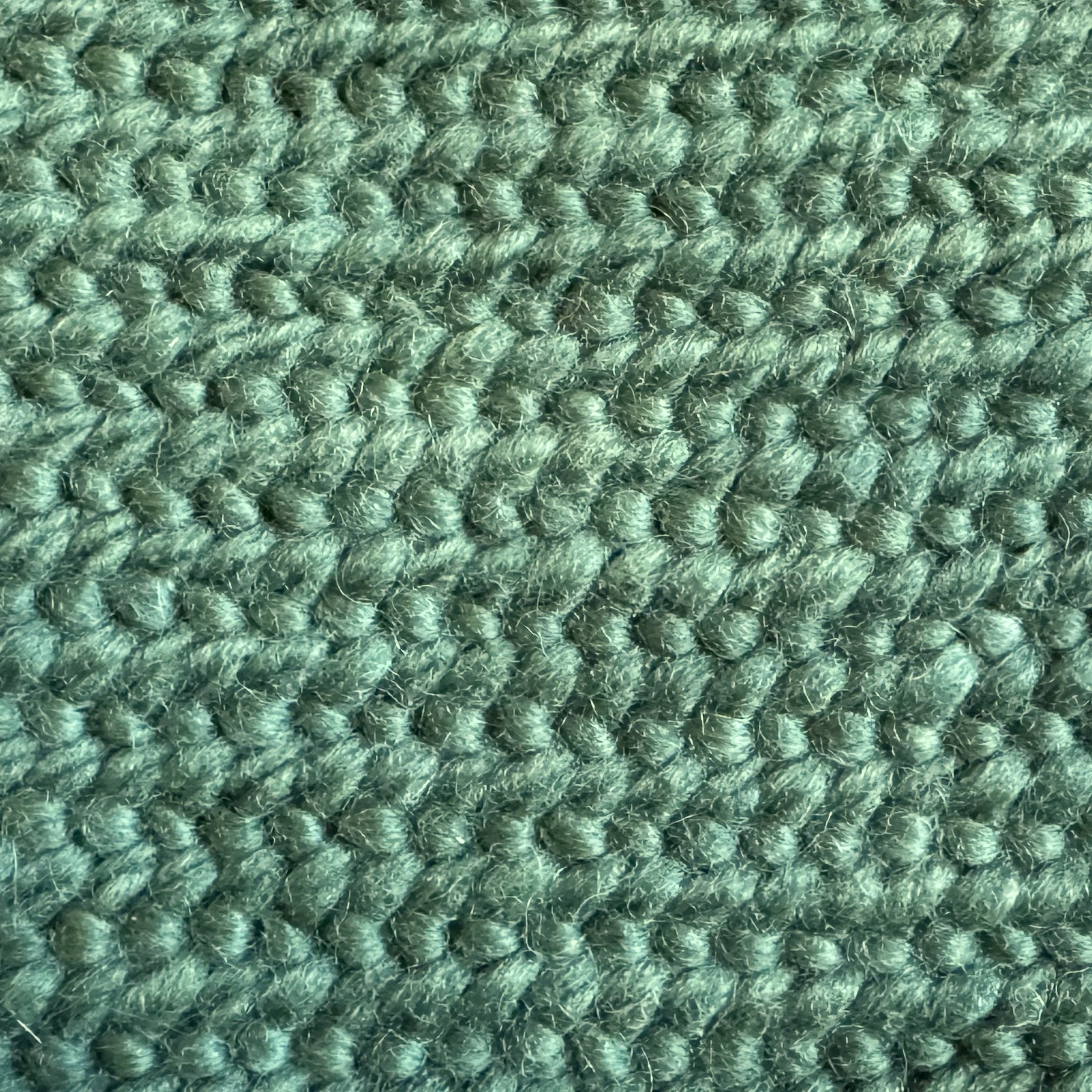
Oslo stitch is a popular, simple stitch and often the first stitch a beginner learns. The fabric it produces is supple and stretchy, and it has an even texture and thickness.
When working in a single color, both sides of the fabric appear the same although the back (“wrong”) side will often be a bit fuzzier.
Stitch group: Two-phase stitches
| Notation system | Pattern |
|---|---|
| Hansen | UO / UO O F1 UO / UO O F2 |
| Kaukonen | 1+1 |
| Nordland | 4(12) = F1 4(11) = F2 |

Directions

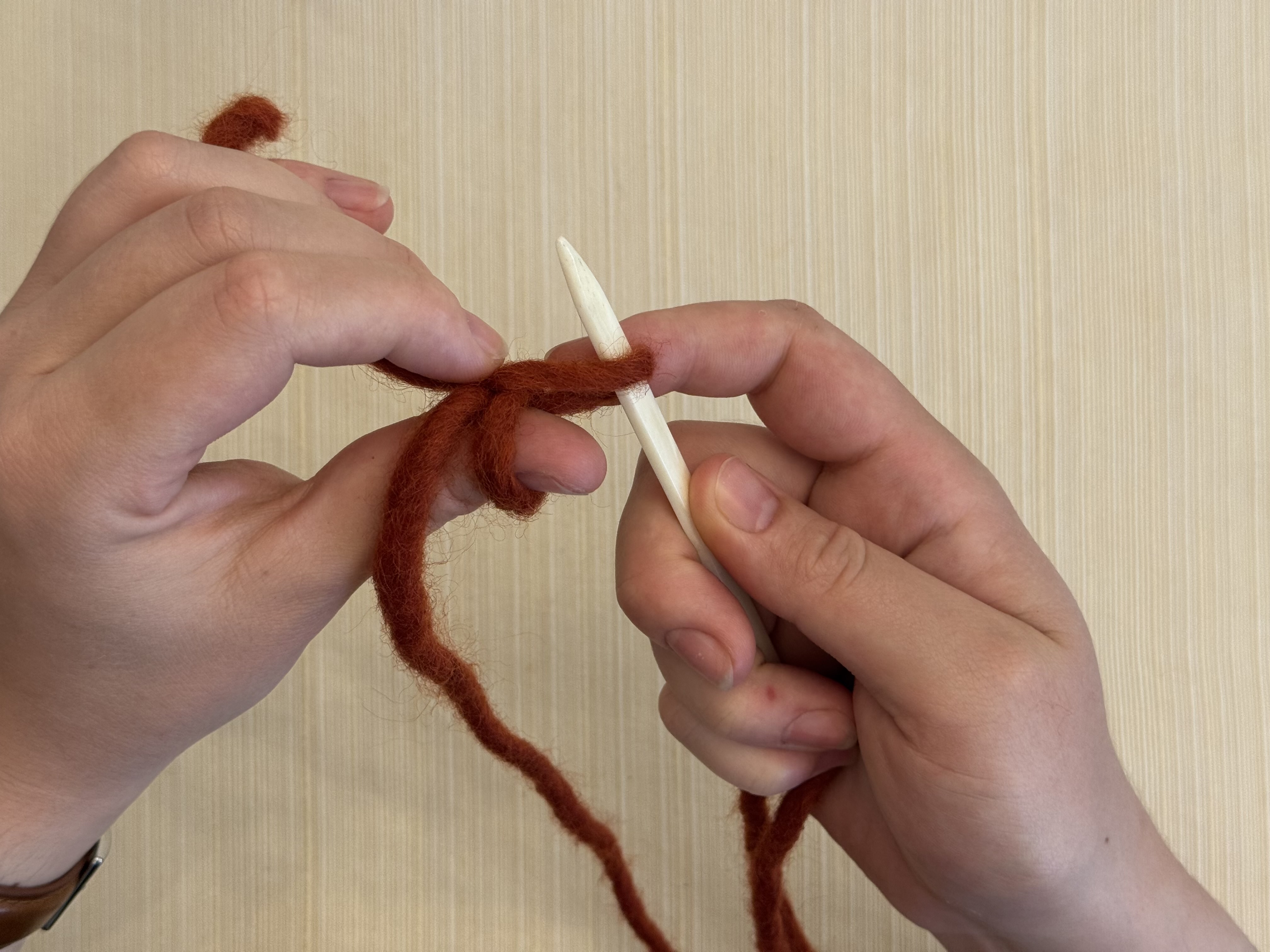
First direction: UO
Insert the needle from front to back through the rear loop, roughly 1″ or 2.5cm.
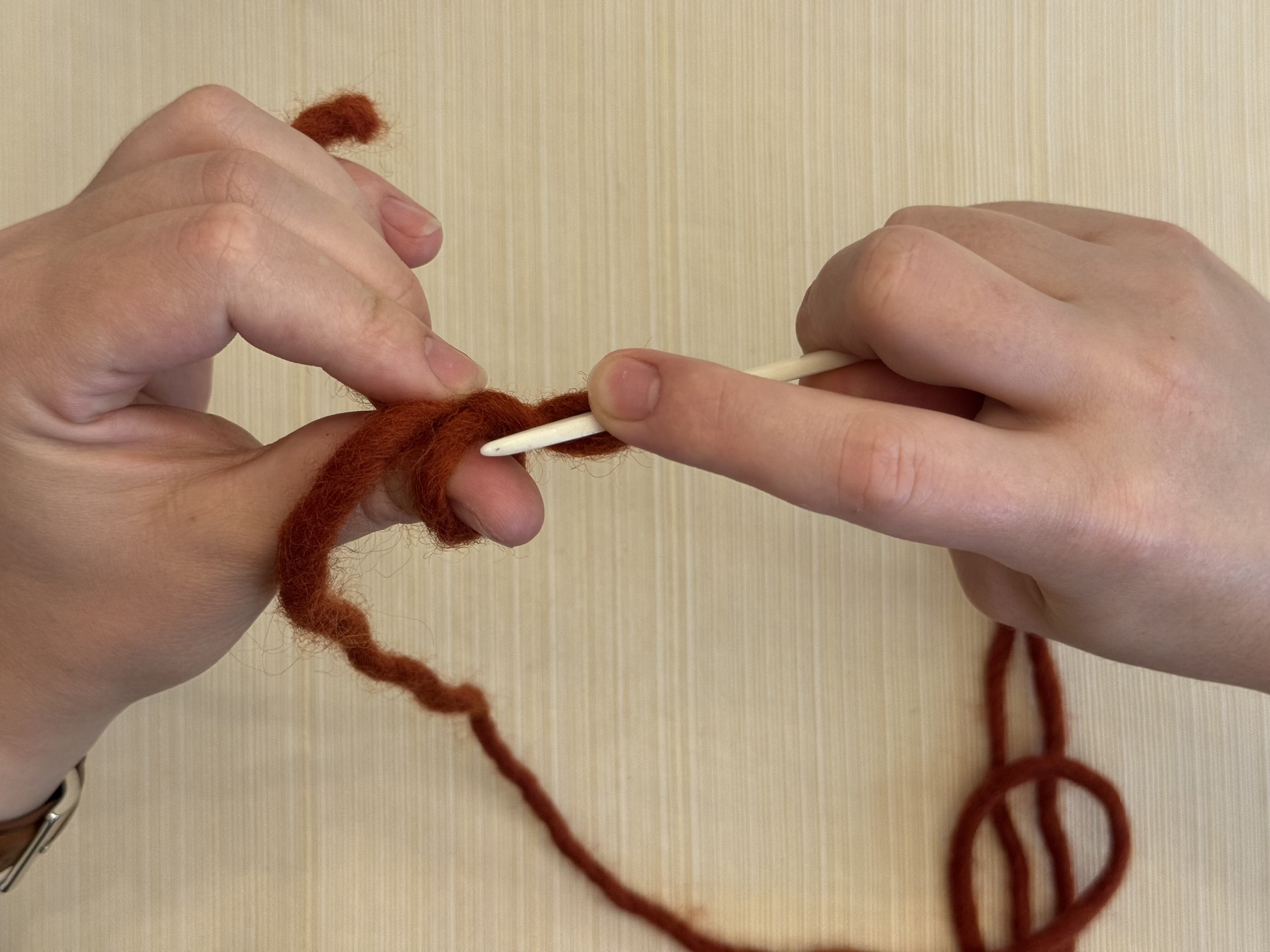
Turn: /
With the needle still through the rear loop, turn it so the tip now points to the left. The rear loop will now be twisted under the needle.
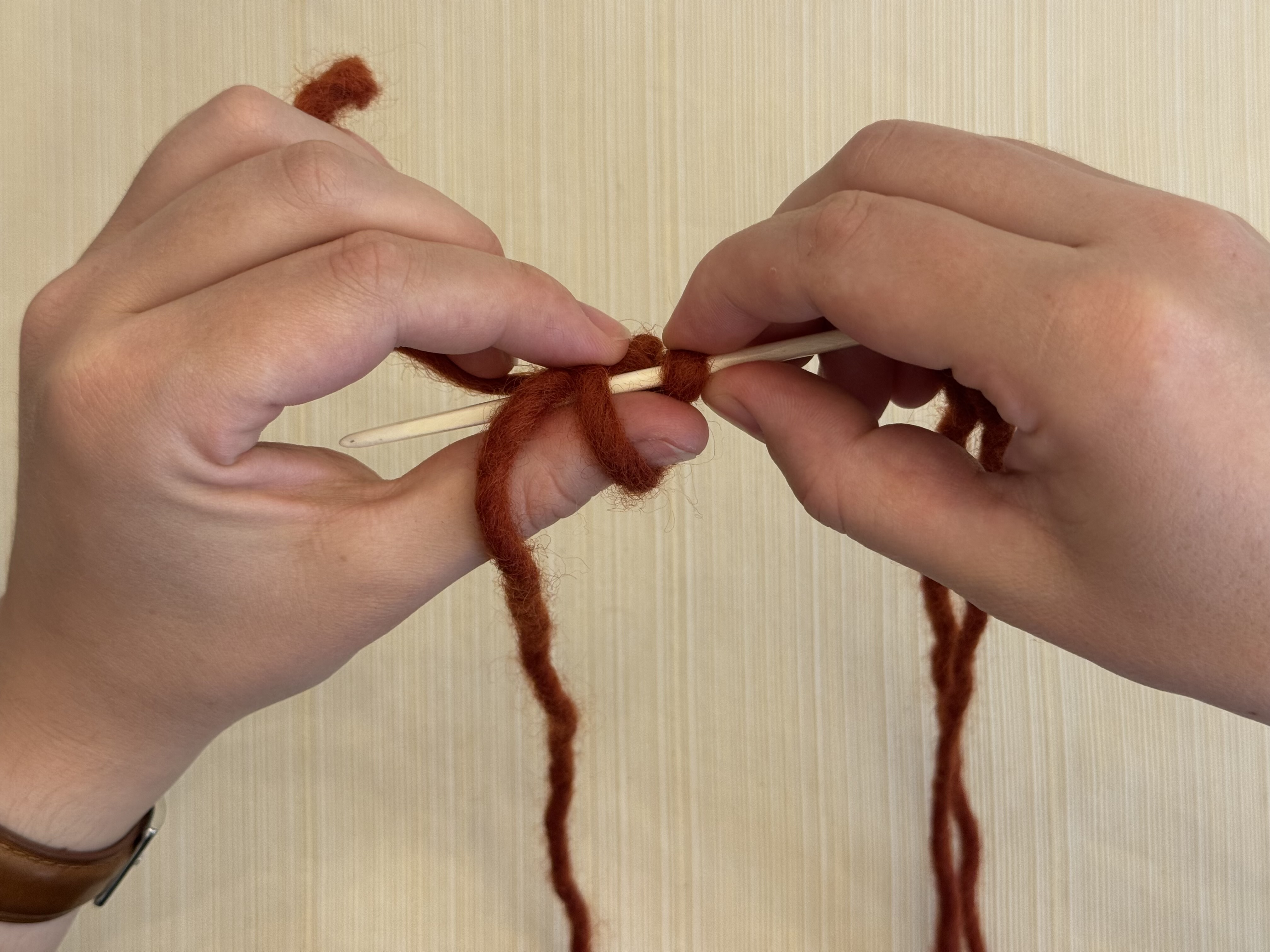
Second direction: UO O
Slide the needle between your thumb and the thumb loop, and between your thumb and the working yarn.
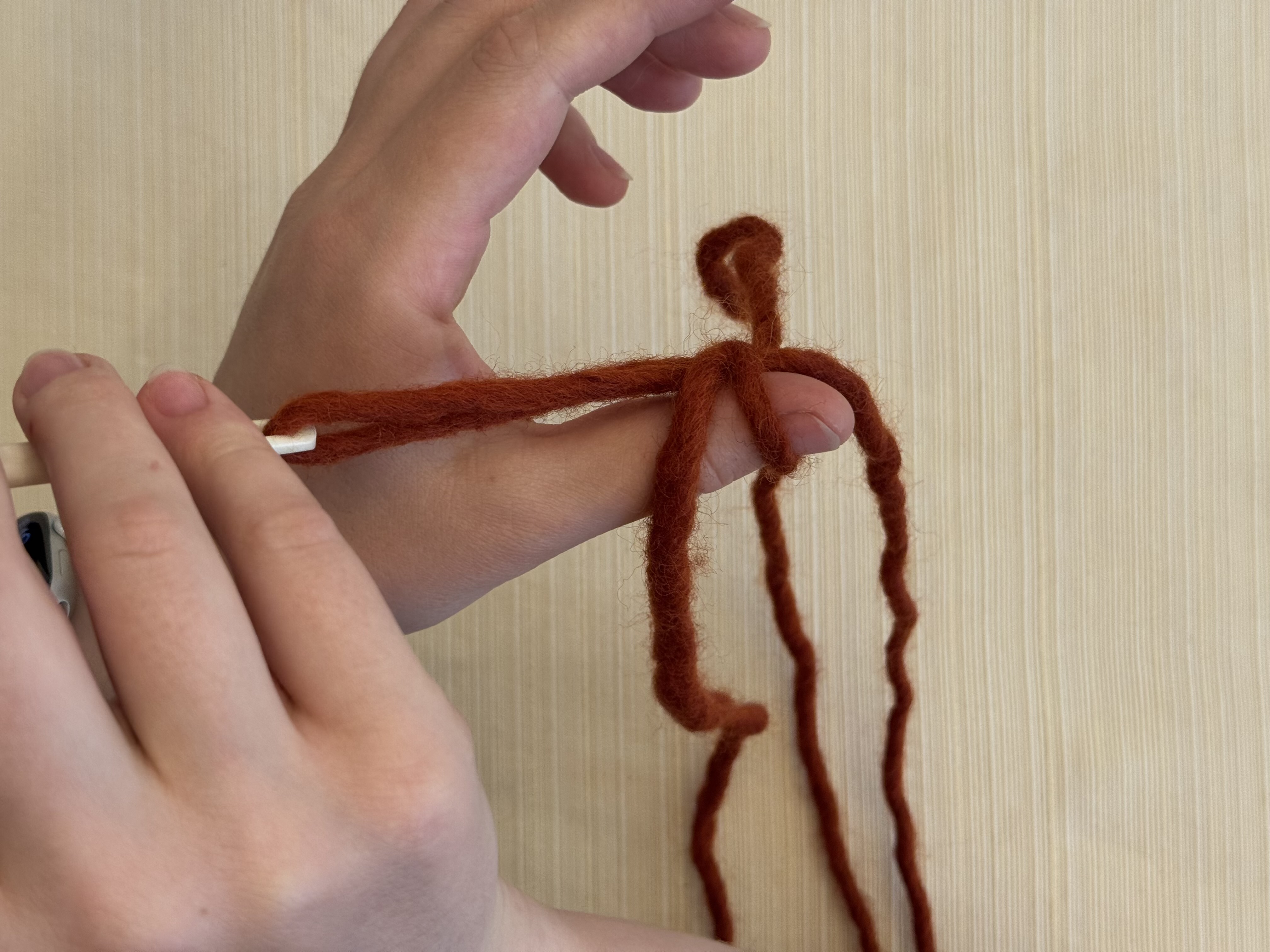
Snug up the stitch
Pull your needle through to the left and pull the working yarn through. This creates a new loop just below the current thumb loop as you pull the yarn snug (but not too tight).
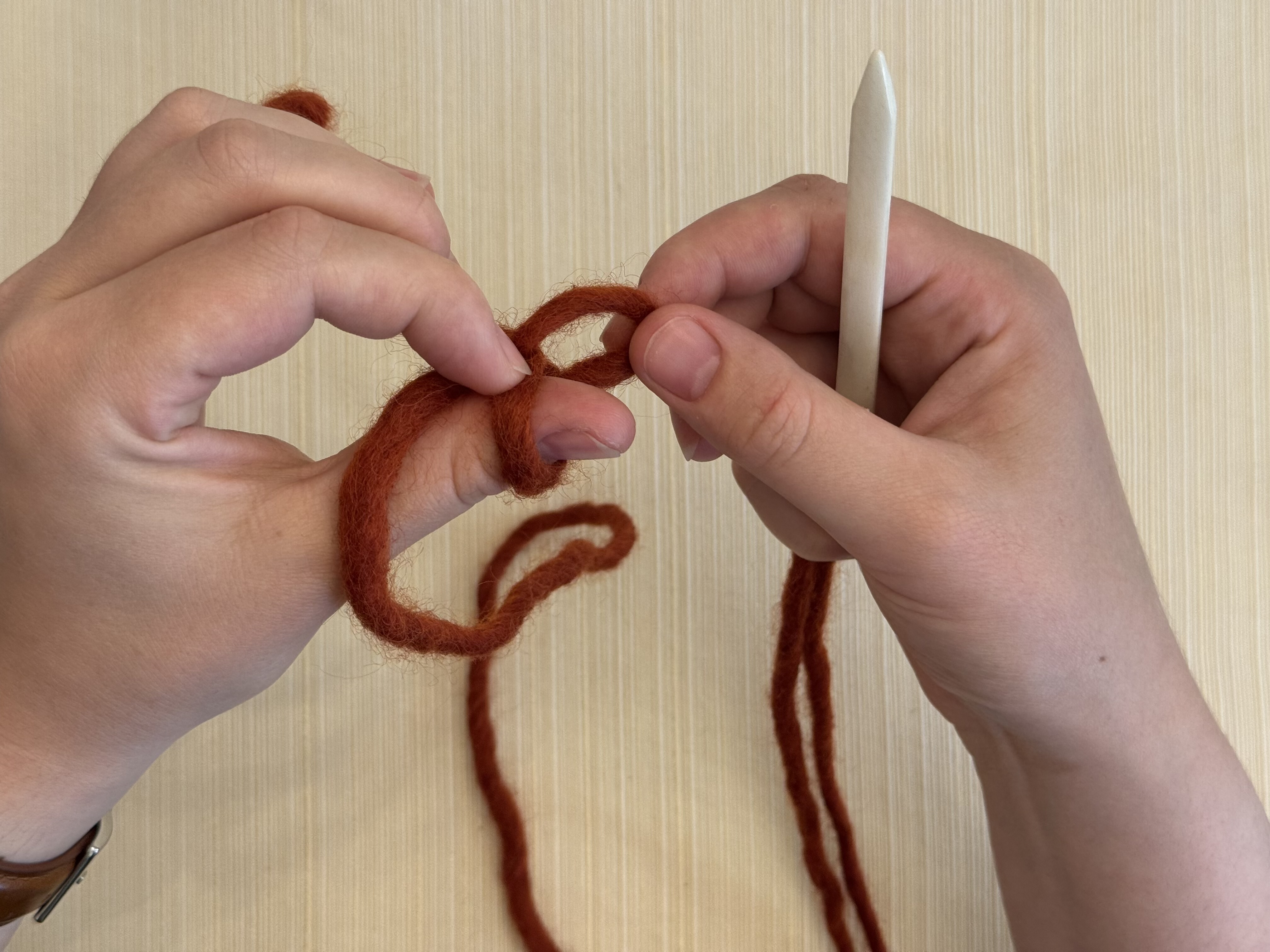
Move the loops
Push the old thumb loop up and back, off your thumb. It’s now the rear loop, and you’re ready to do another stitch.
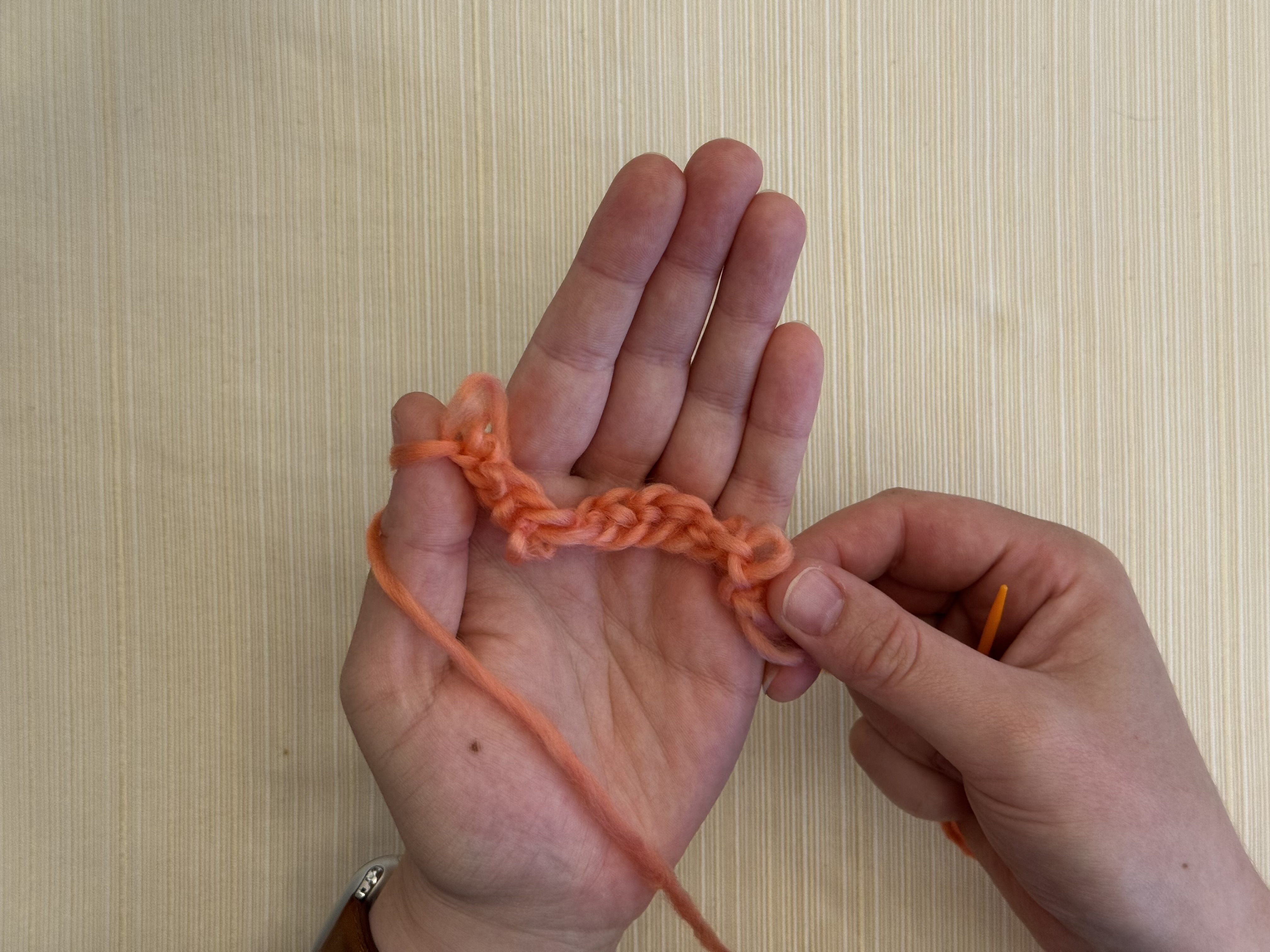
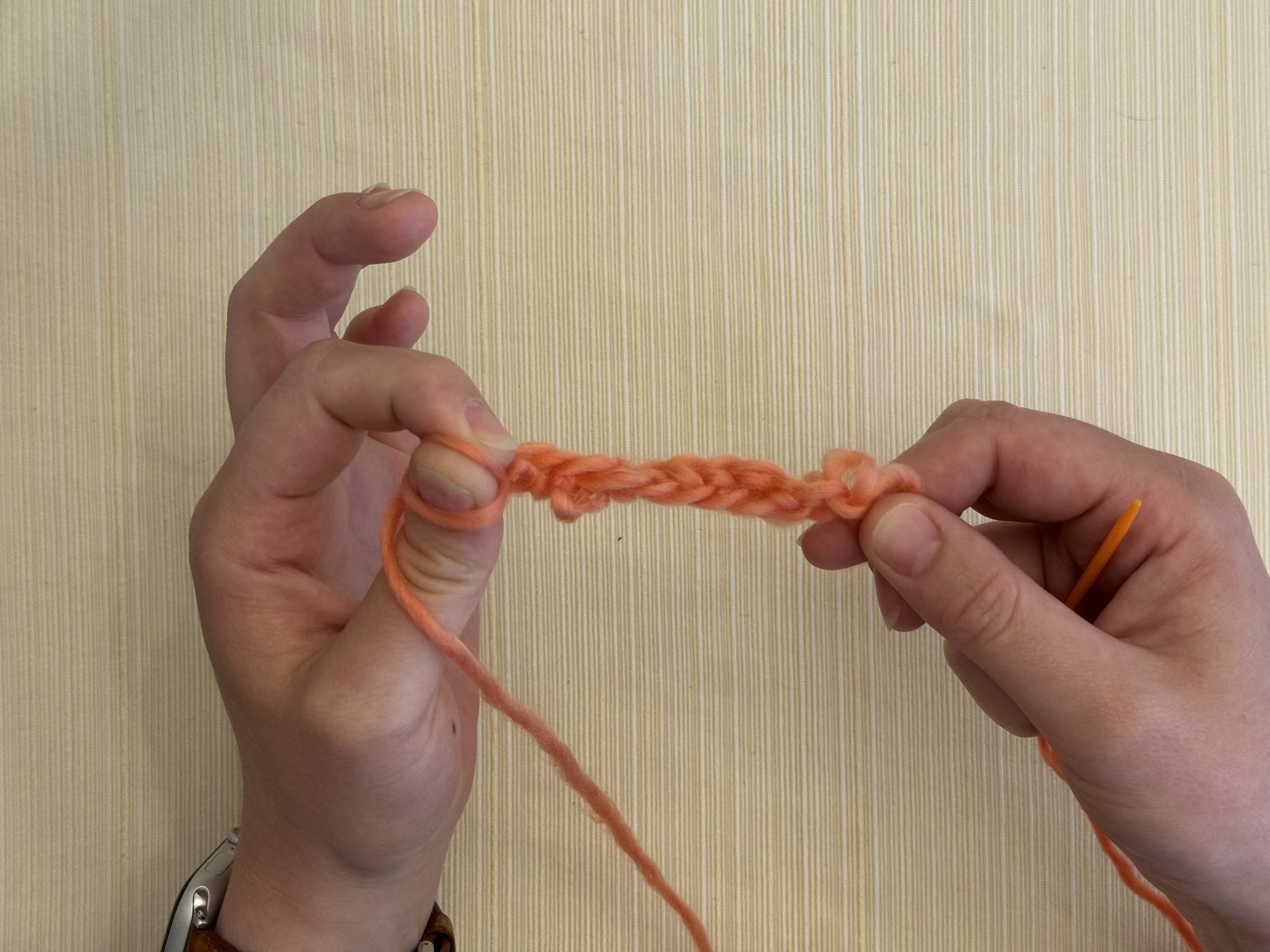
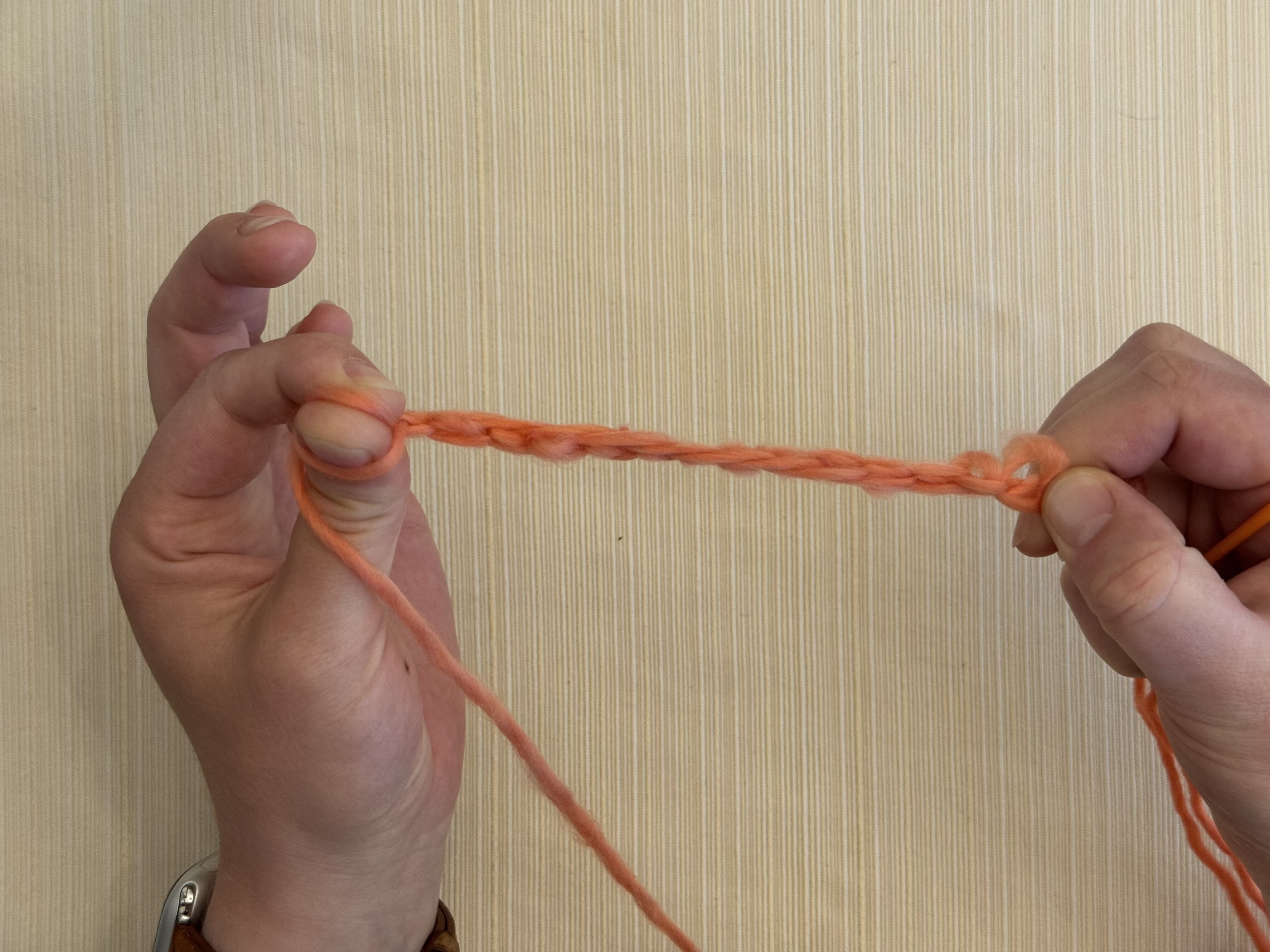
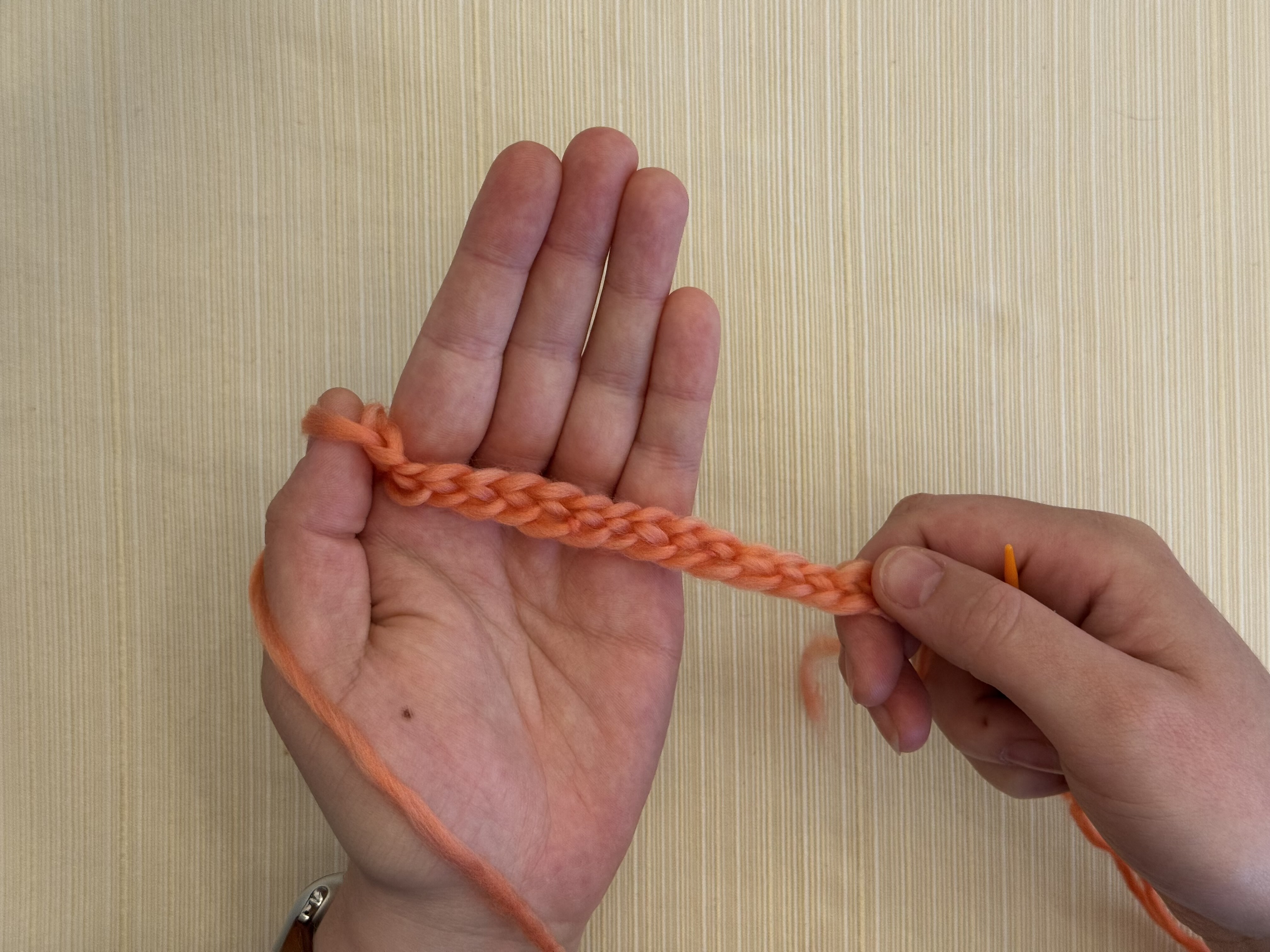
Tidy up the chain
Make several more stitches to create a chain. The chain may look a bit messy, curled or lumpy. Grab it from both ends and give it a few gentle tugs to even out the stitches.
Joining rows with F1
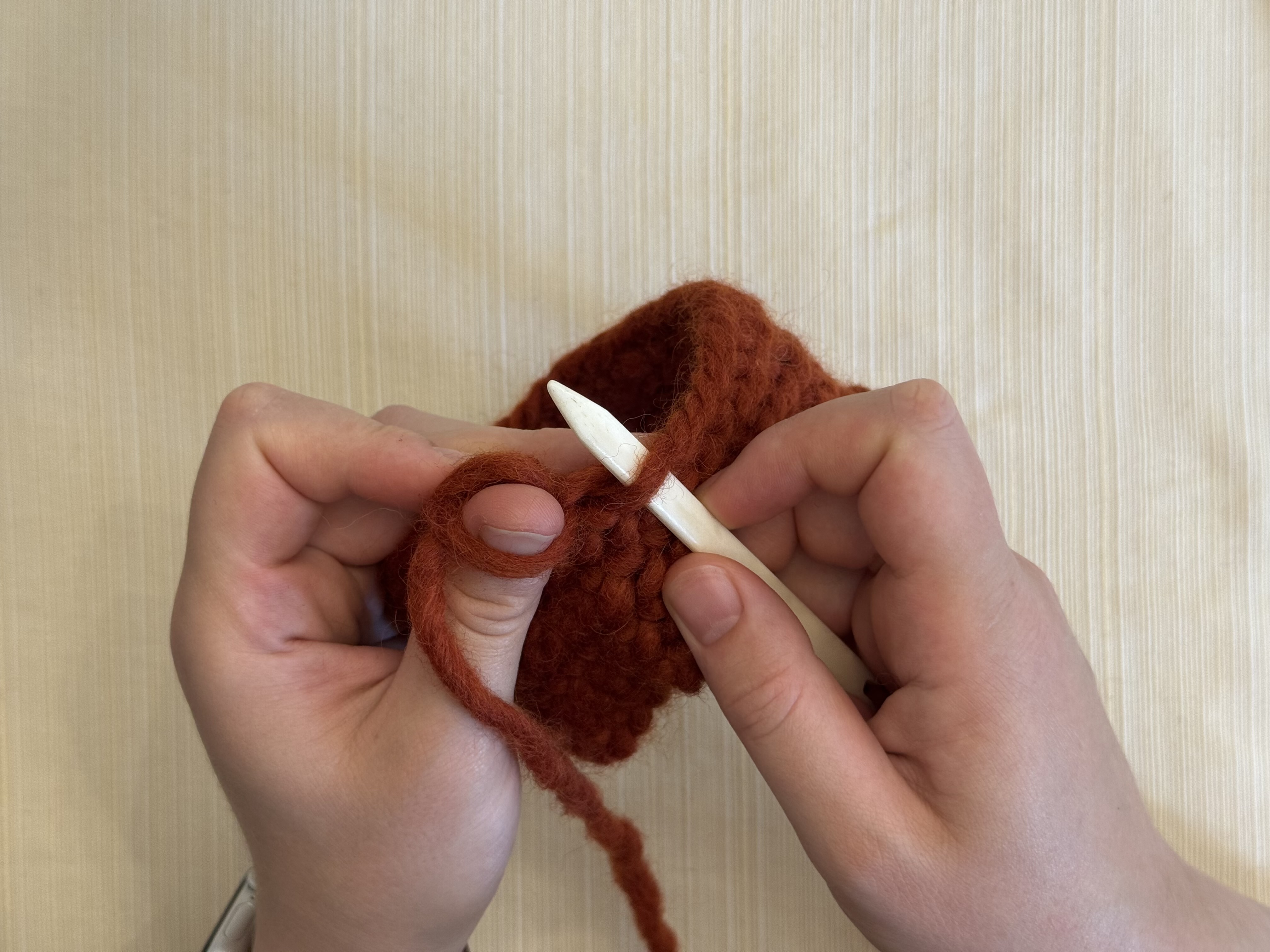
Pick up a single stitch from the previous row, then start a new Oslo stitch.
This is the most common join used with Oslo stitch.
Joining rows with F2
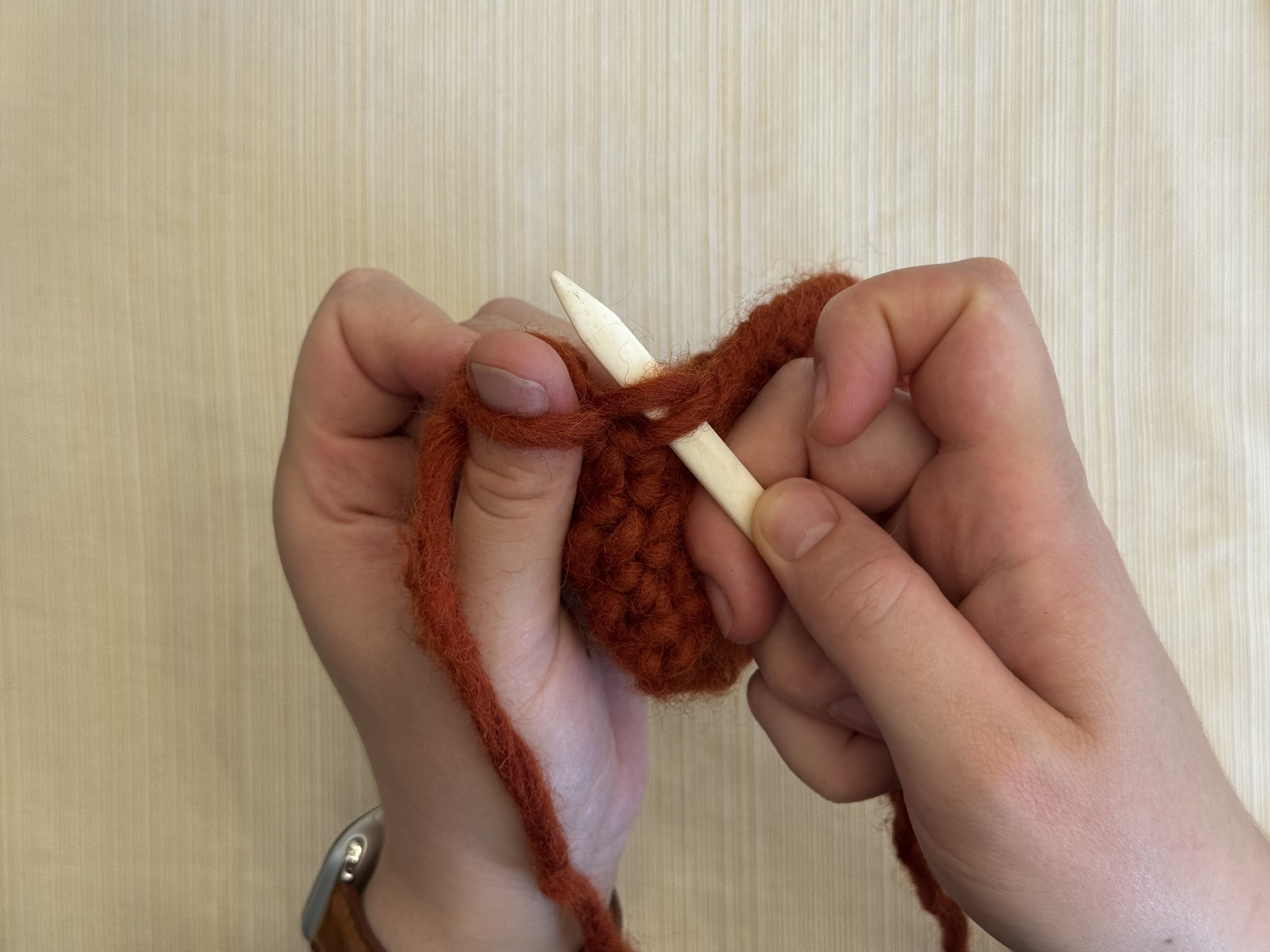
This creates a denser fabric than the F1 join.
Pick up the previous row’s next empty stitch and the stitch before it, then start a new Oslo stitch. Don’t pick up two empty stitches, since this will make a decrease stitch instead of a single stitch.
Variants
Double Oslo stitch
When passing the needle through the back loop, do this twice to create a second twist in the body of the stitch.
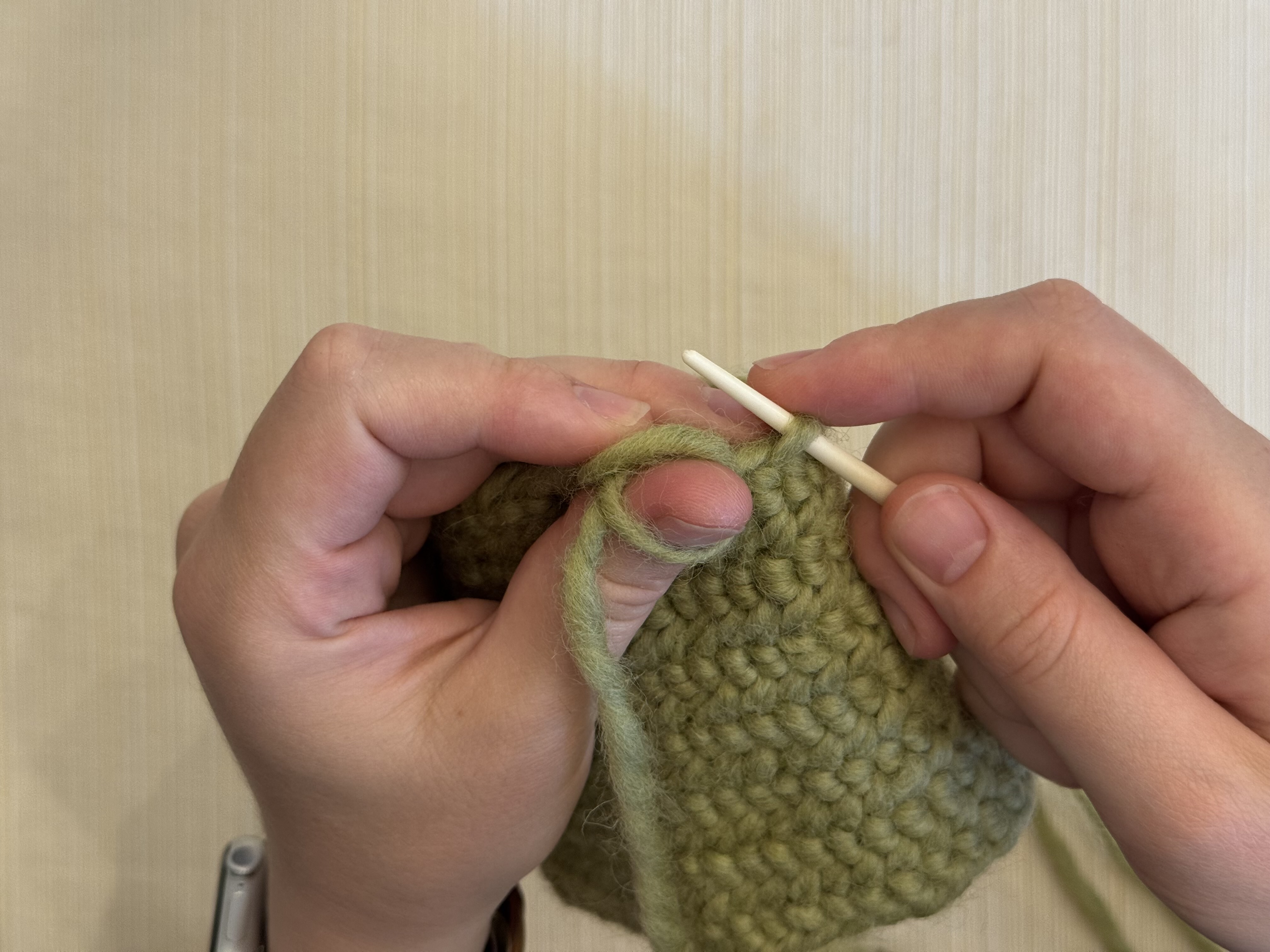
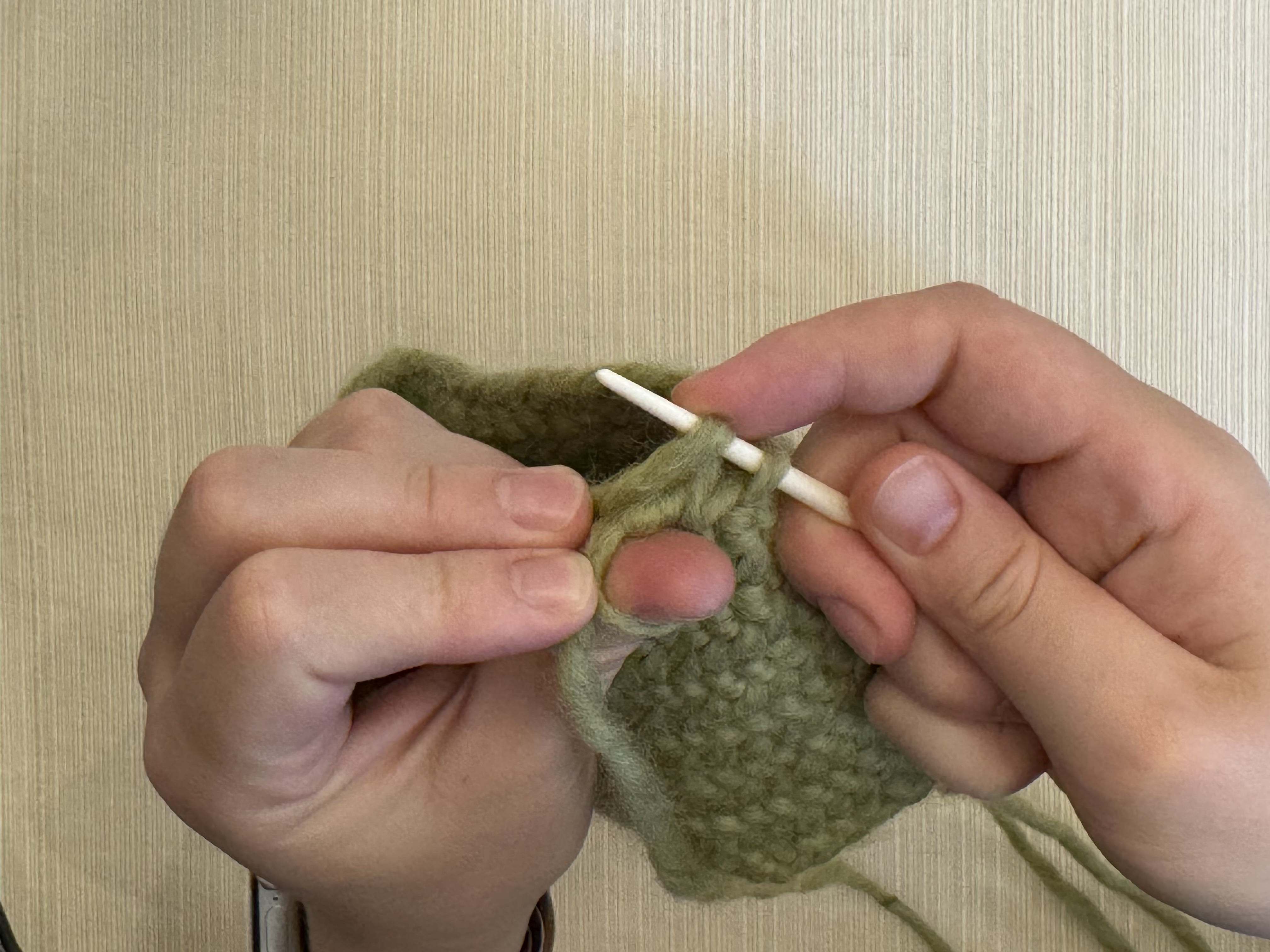
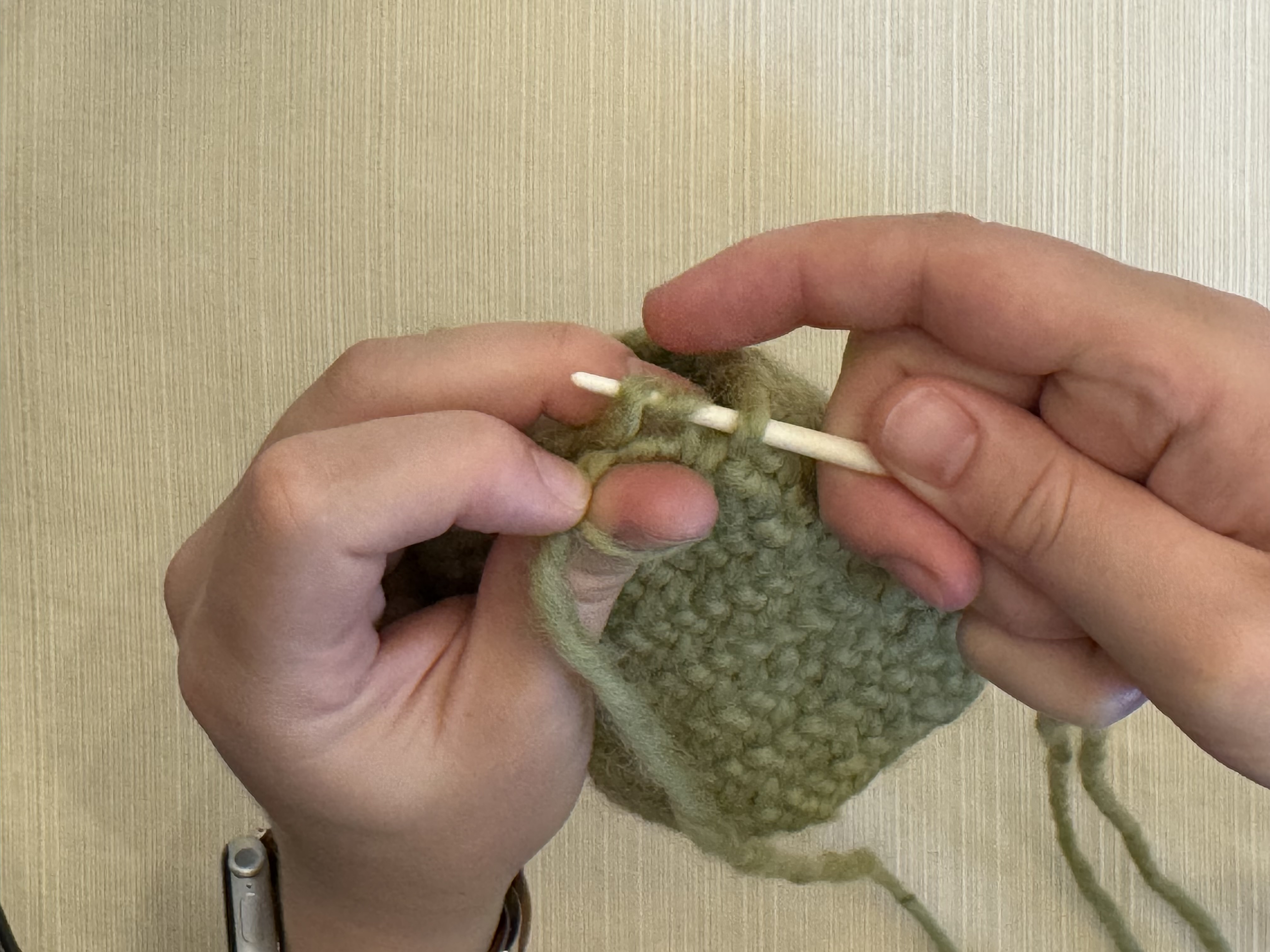
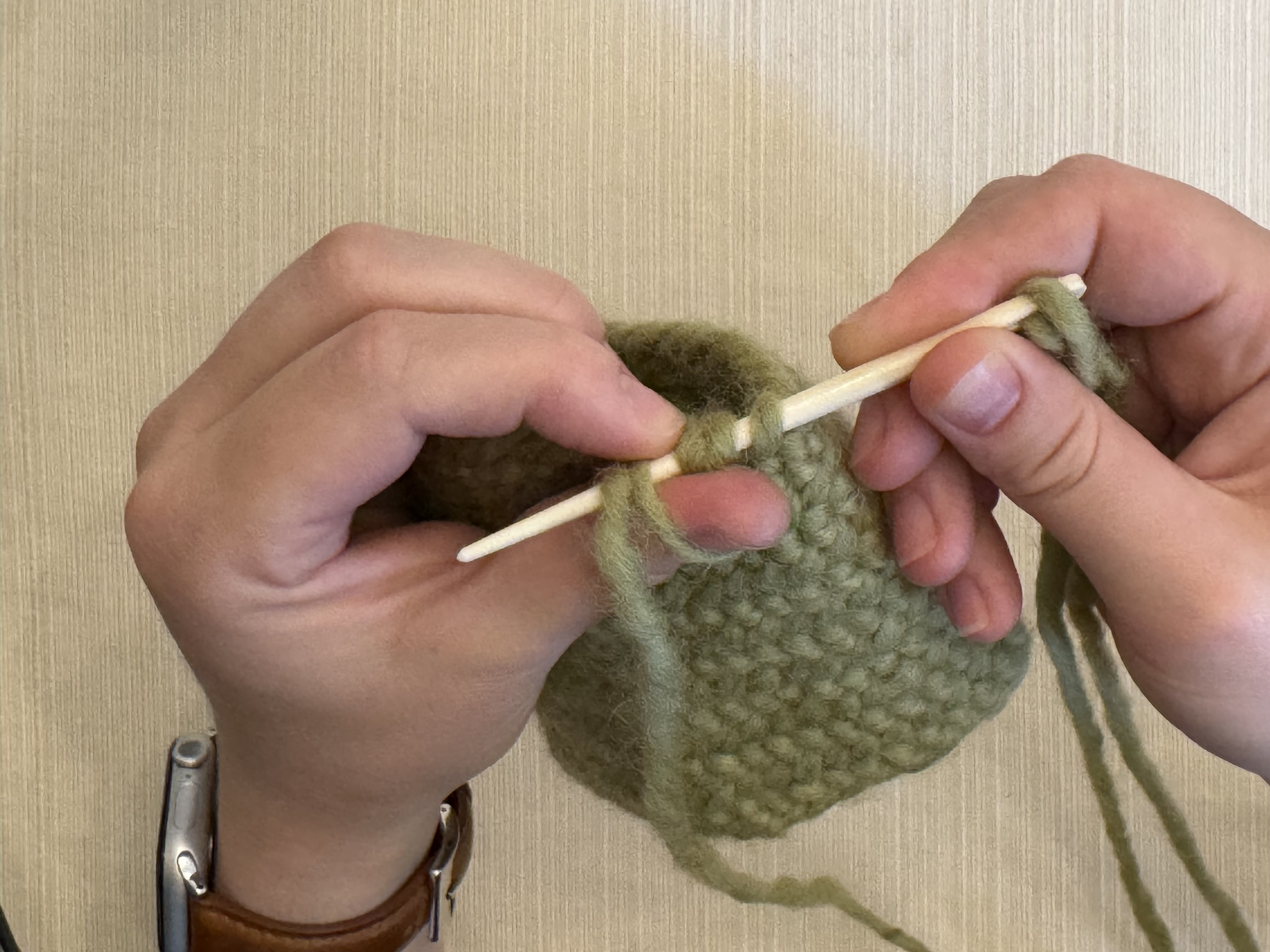
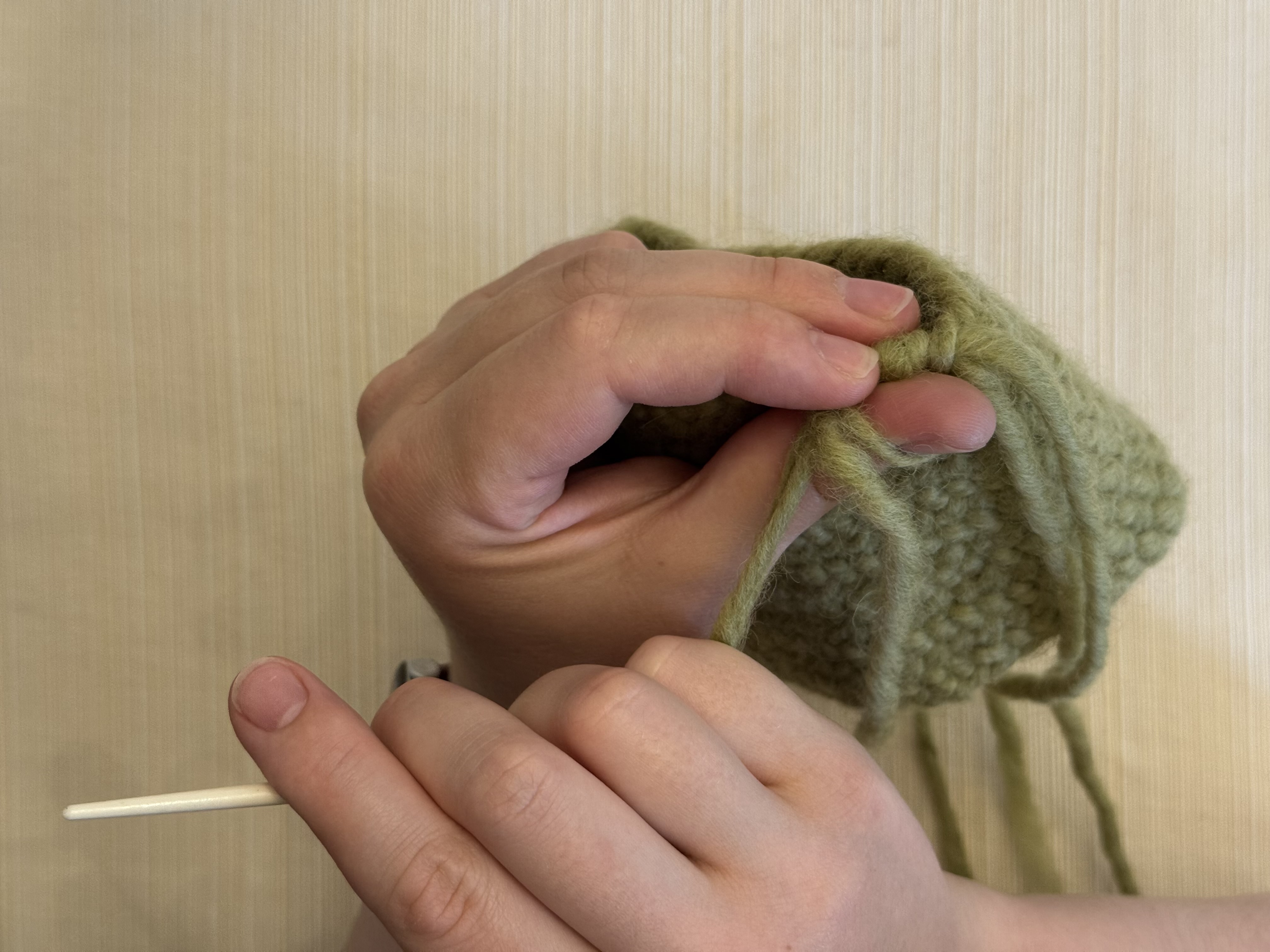
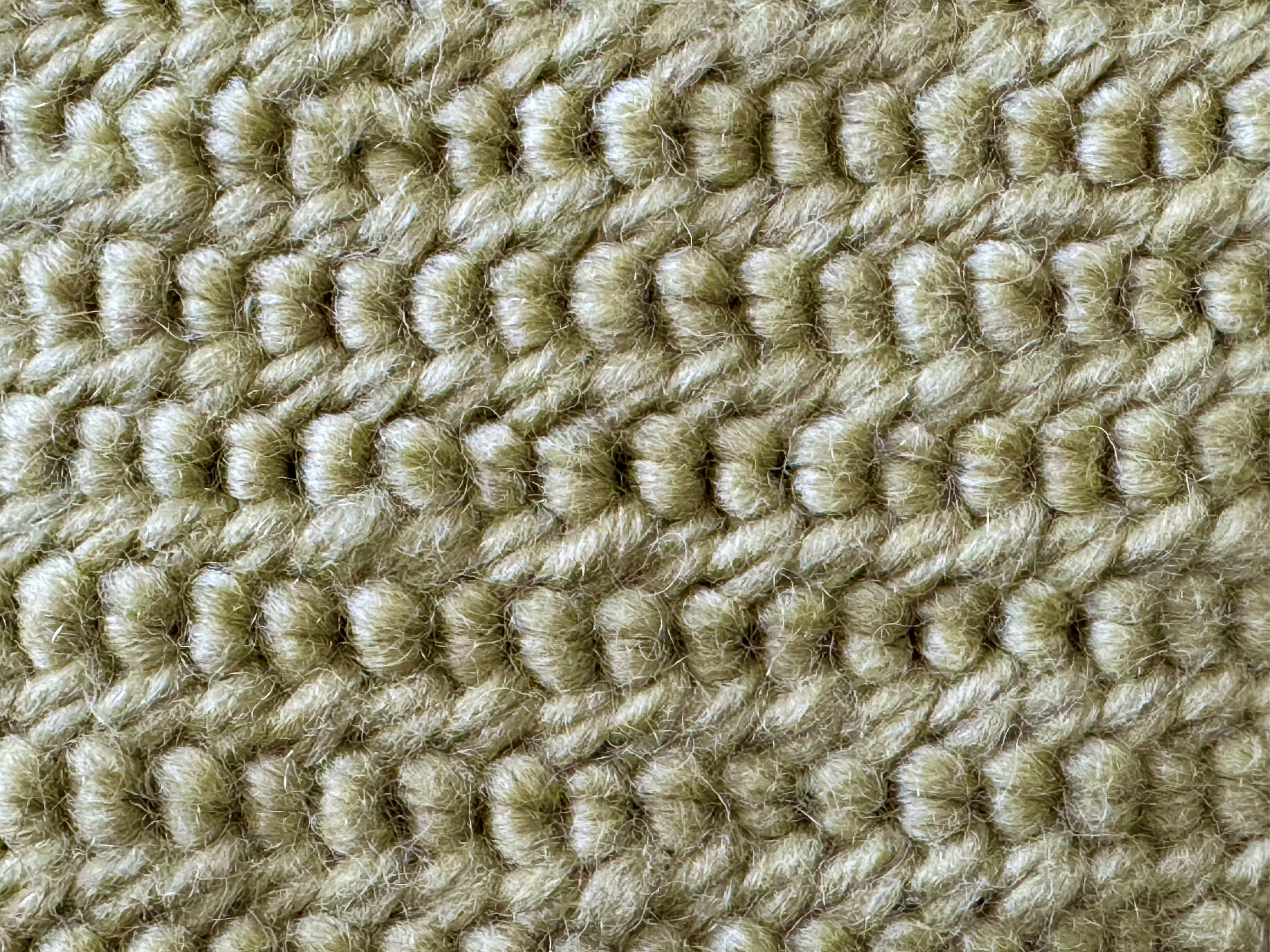
Plaited edge
B1 join


F1 join


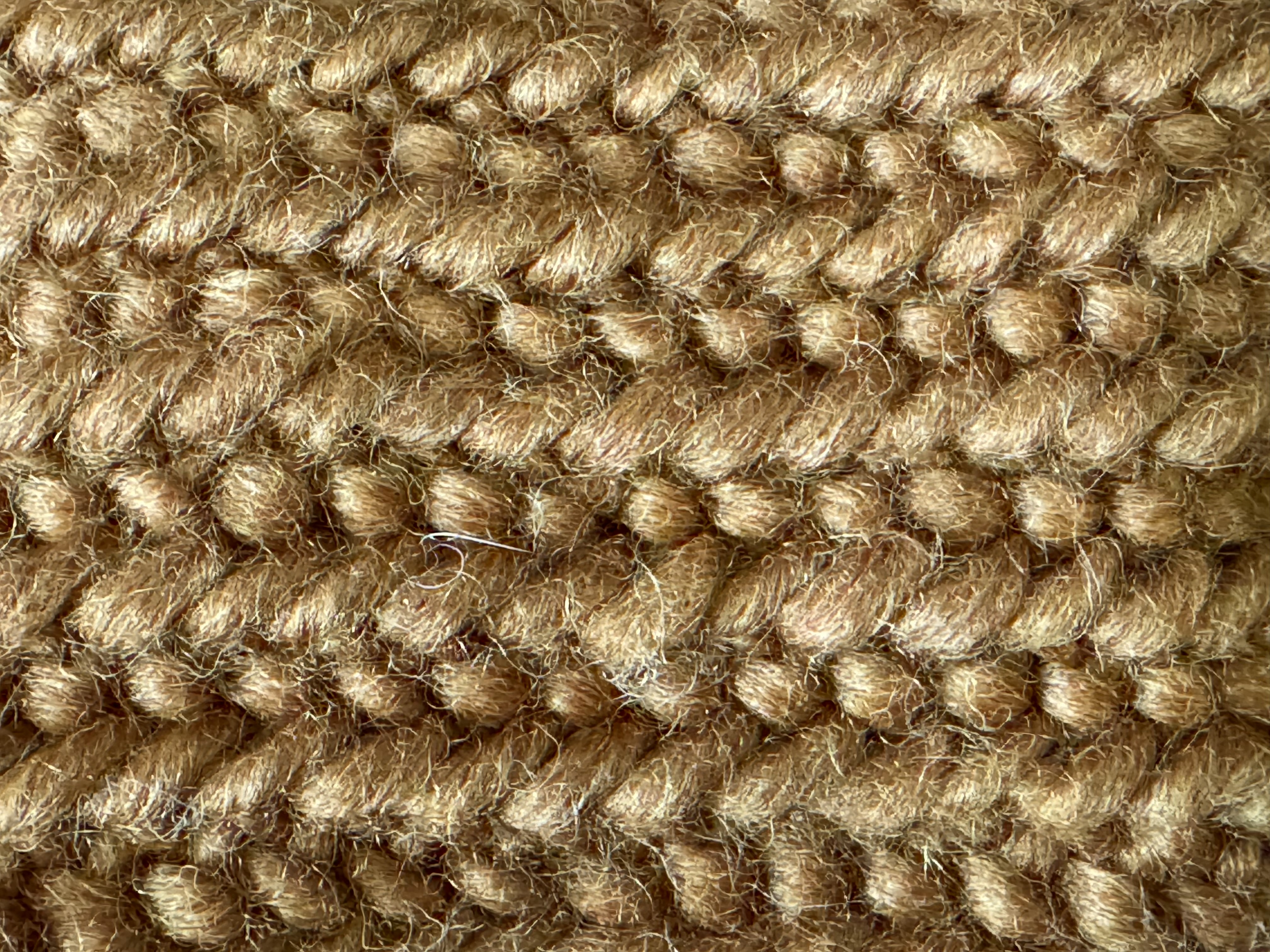
Multicolor striping
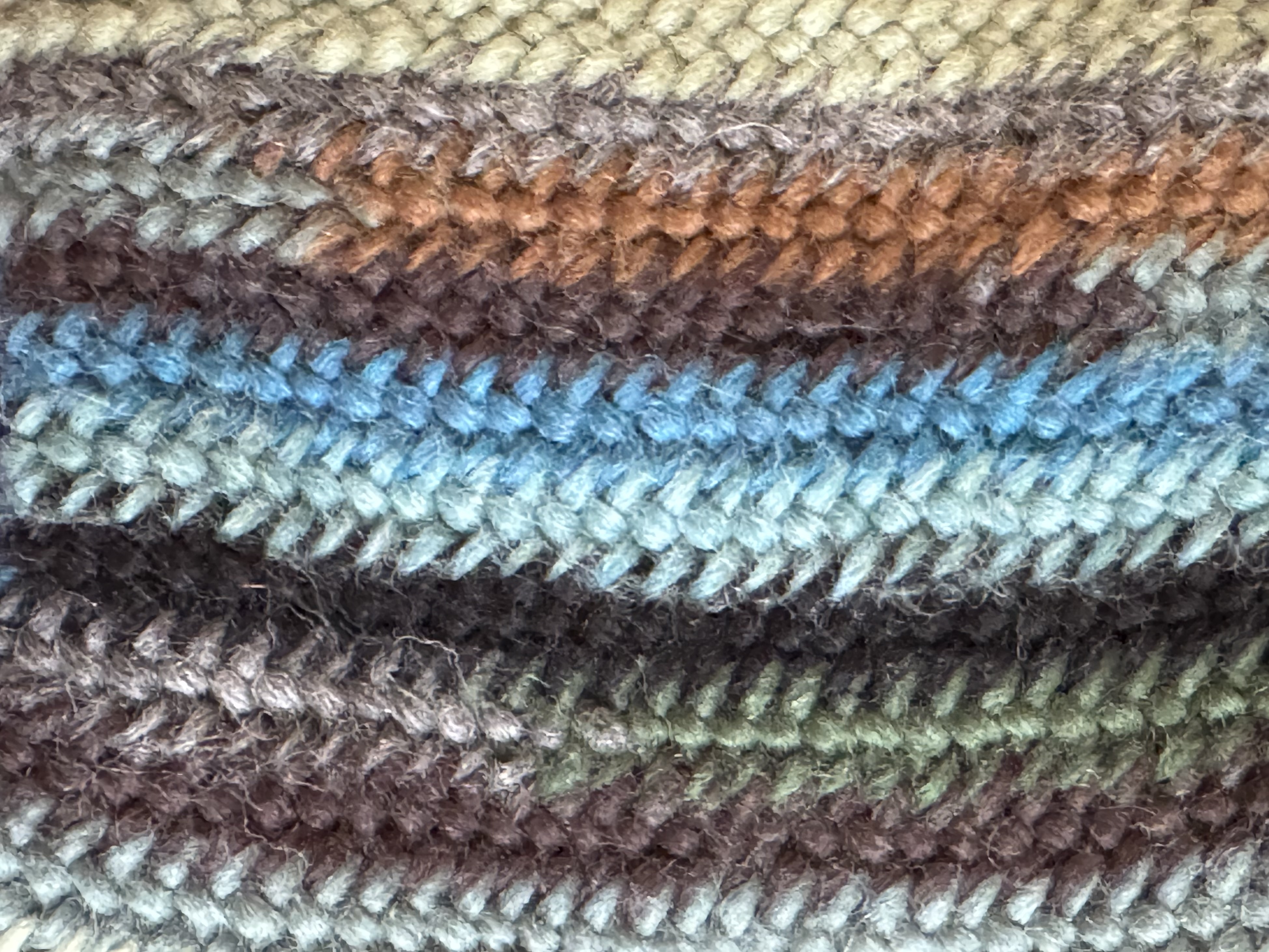
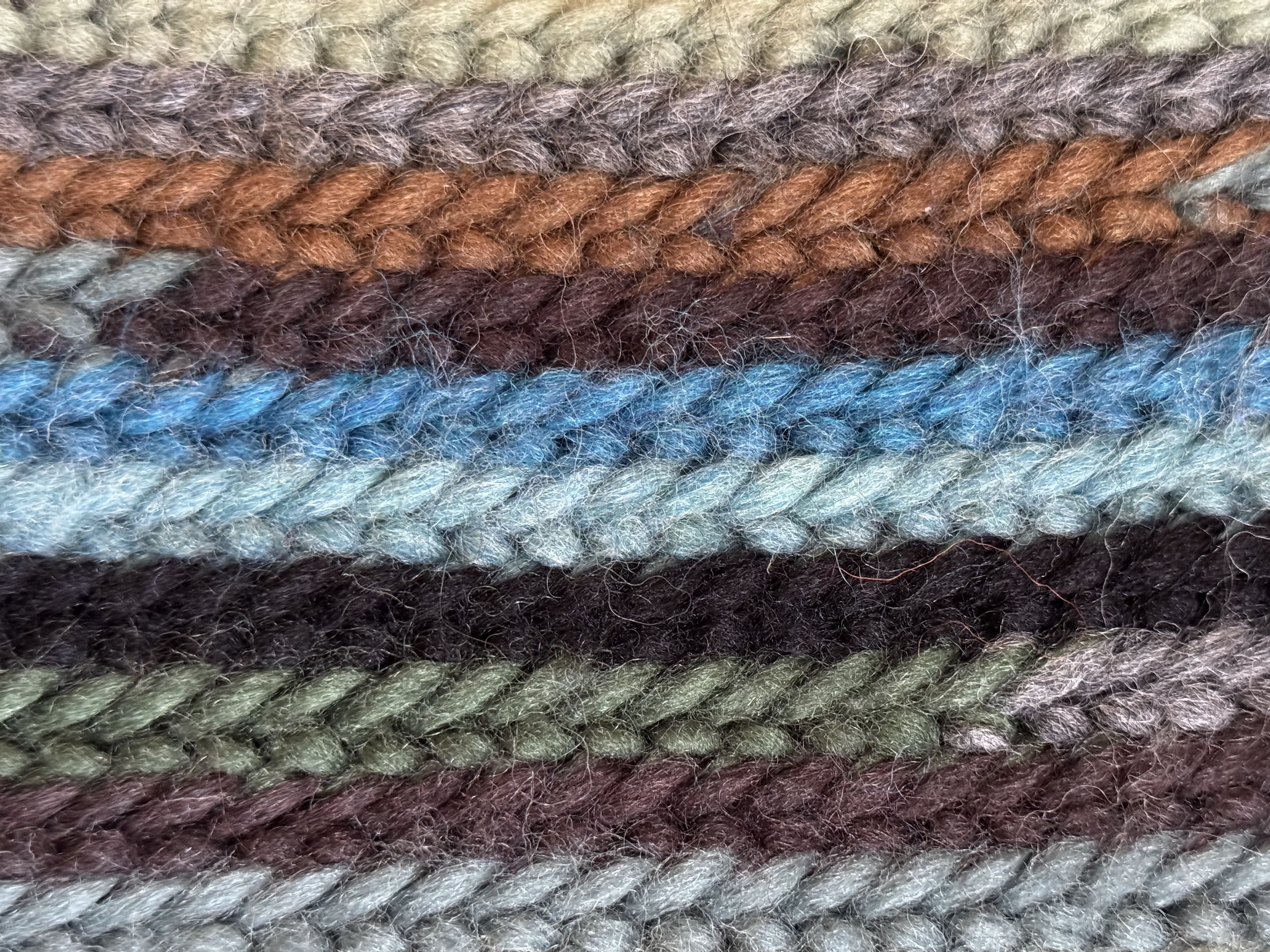
When using multiple colors of yarn, rows will either blend together or be distinct depending on the side of the fabric. The right side (facing you while working) will blend, and the wrong side (facing away while working) will have distinct stripes.
Notes
- This is a very stretchy stitch unless worked very tightly or with very thick yarn.
- Most of the stretch happens vertically, rather than horizontally along rows.
- Oslo stitch worked on the thumb tends to have the best results with worsted weight yarn or heavier. Lighter/thinner yarns will have looser, lacier stitches.
Origin
Oslo stitch is named after a mitten dating back to 1025-1125 CE, found during excavations in Oslo, Norway. Several other finds also use this stitch:
- A mitten from Lund, Sweden
- A mitten from Arnheiðarstaðir, Iceland
- A few mittens from Copenhagen, Denmark
- A fragment from Novgorod, Russia
The Oslo stitch has seen continued use in Scandinavia through the modern day.
Also known as
- Lund
- Simtuna
- Södertjära
- Variant A
- Variant 1
- Variant 2
- Finnish Stitch 1+1


