
Each method of joining to your previous row produces a subtly different fabric by altering how the loops of each row interact with each other.
Turning a chain into a loop
First things first, let’s take a single chain and connect it back to itself to form a loop. We’ll use the F1 connection for now.
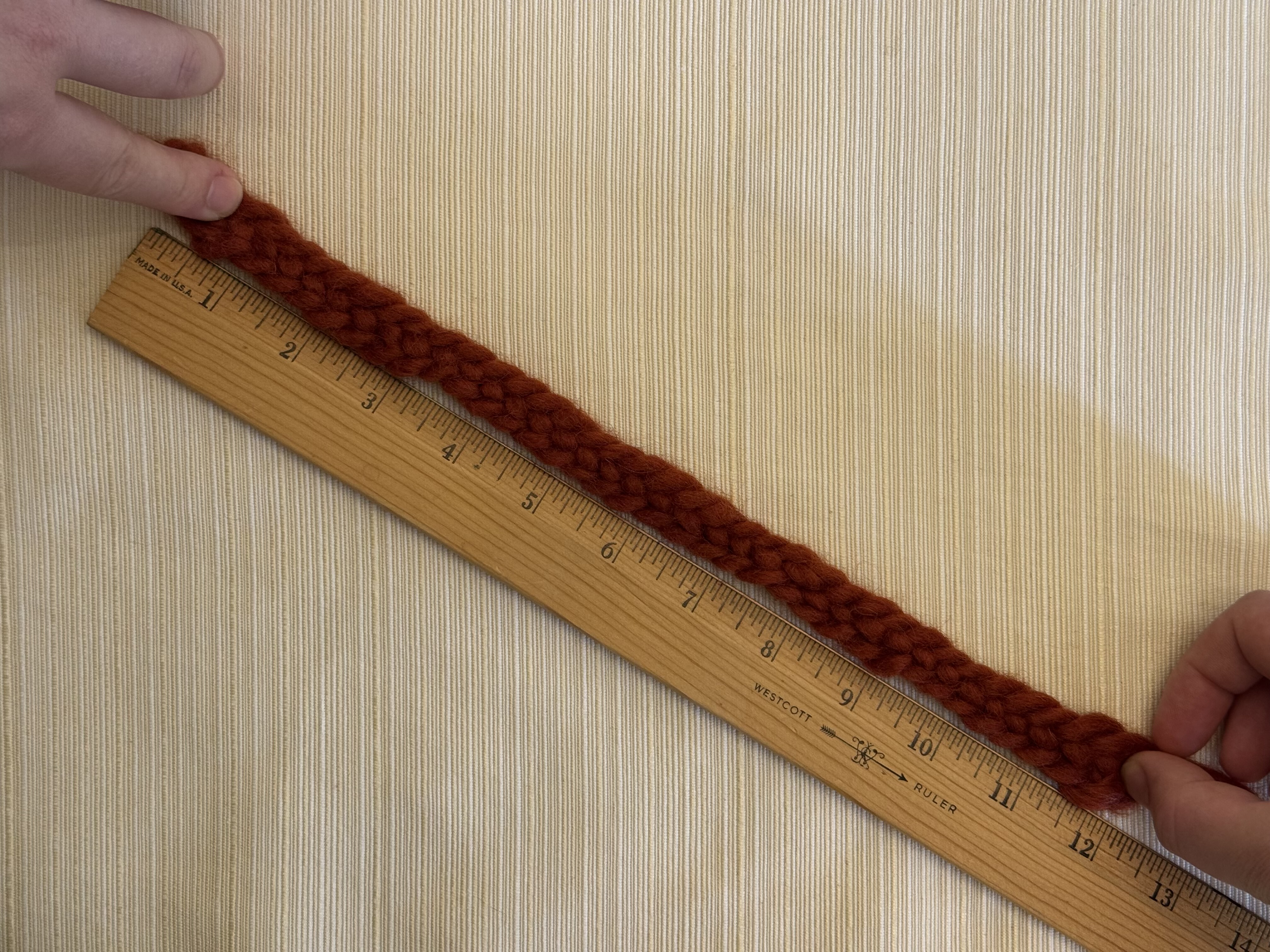
Make a chain of stitches to the desired length; here, the chain is about 12″ (30.5cm) long.
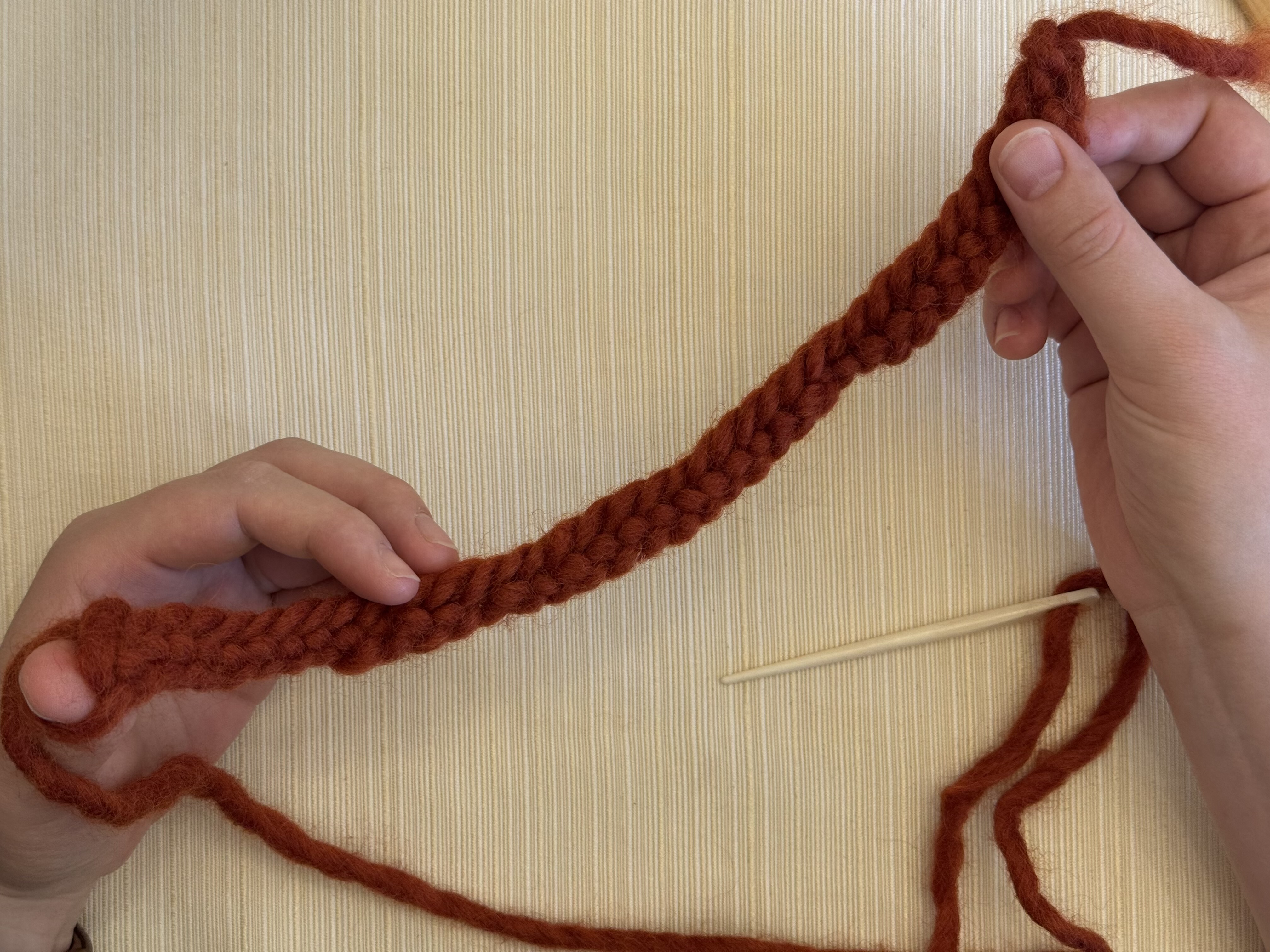
Get your chain ready to work with, and hold it so that it’s flat without any twists.
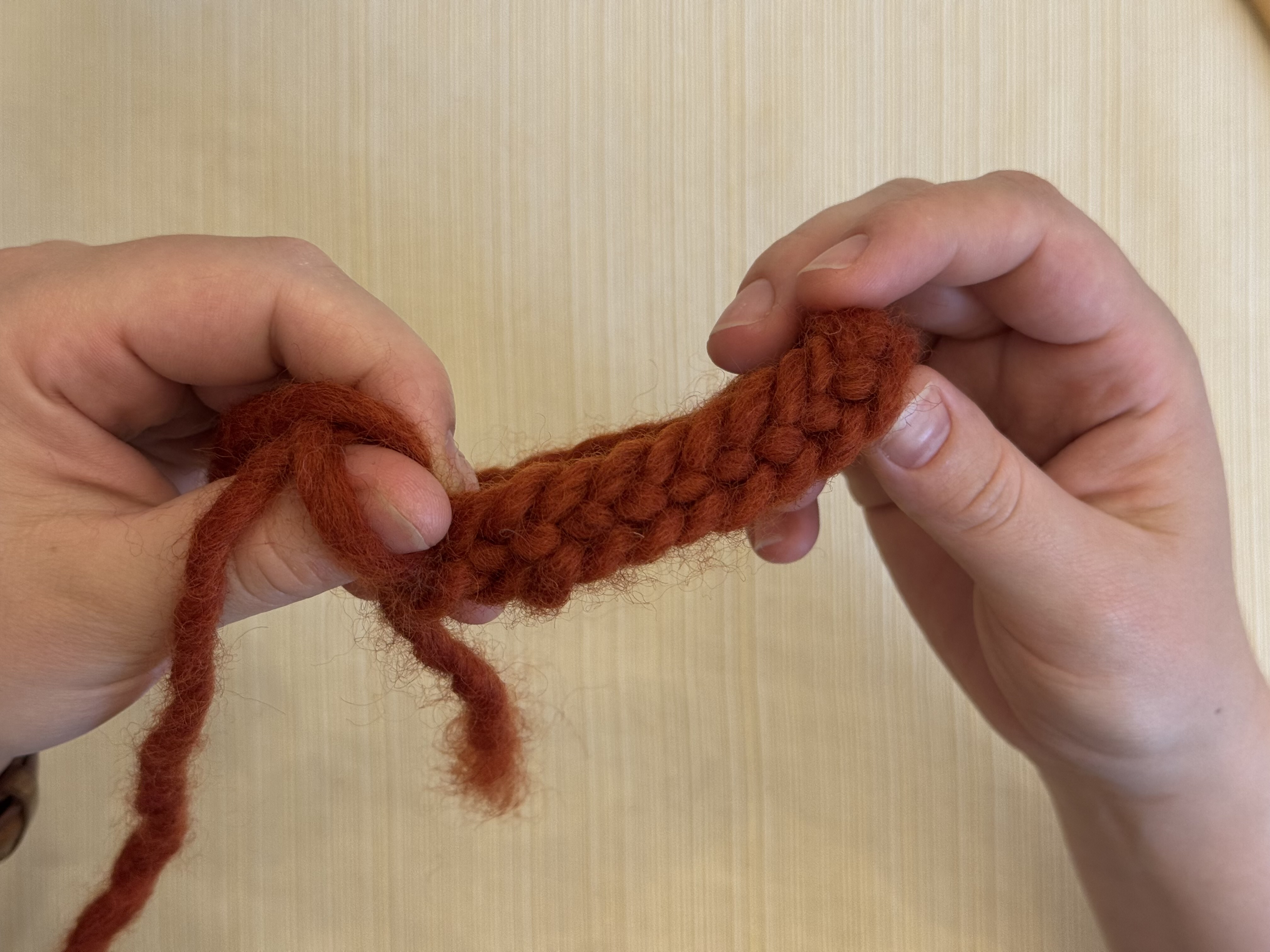
Bring the ends together, with the end on your thumb above the other end. Check to make sure there’s no twists in the chain.
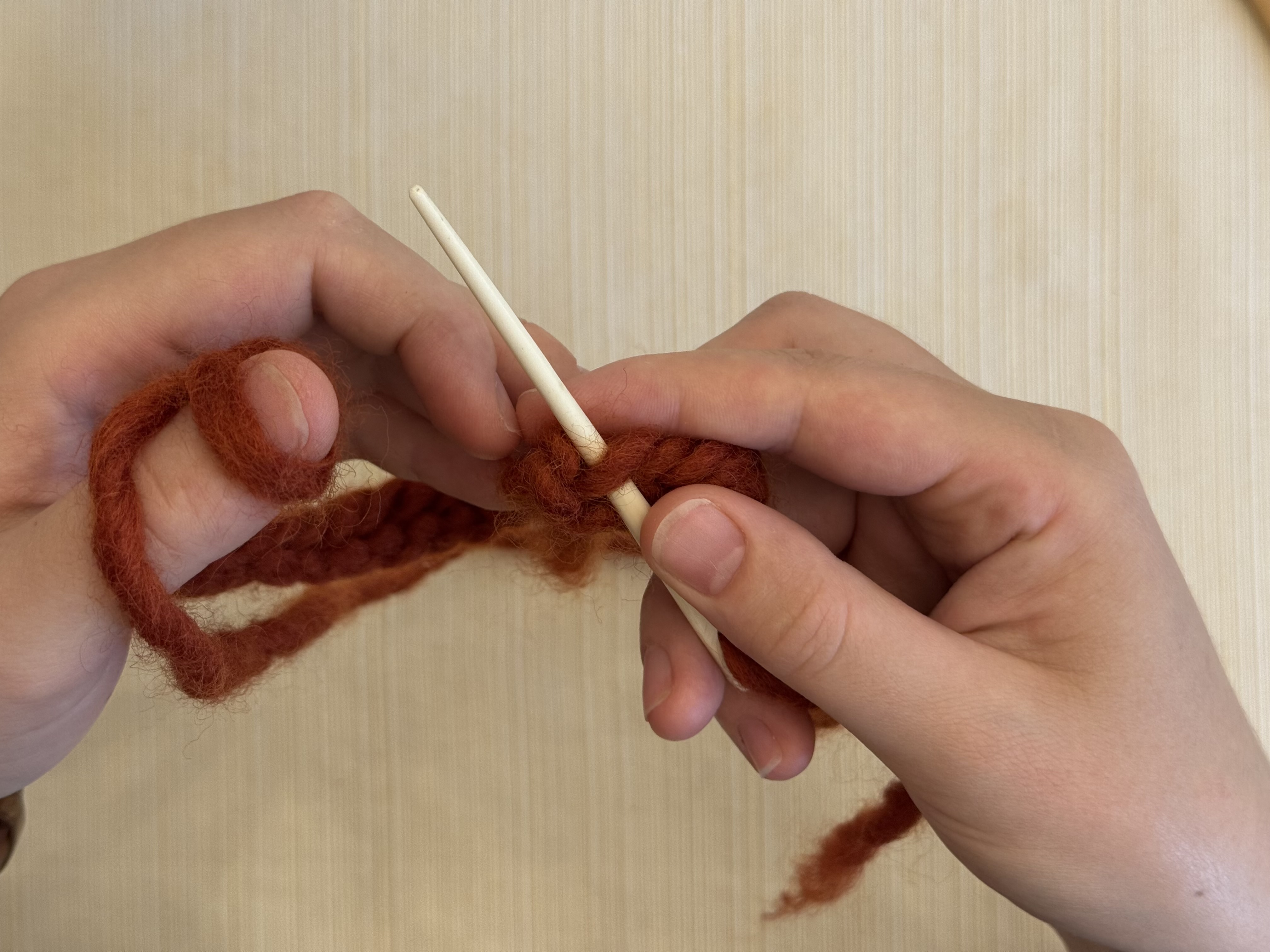
With your needle, pick up the first of the top-edge loops on the old end of the chain.
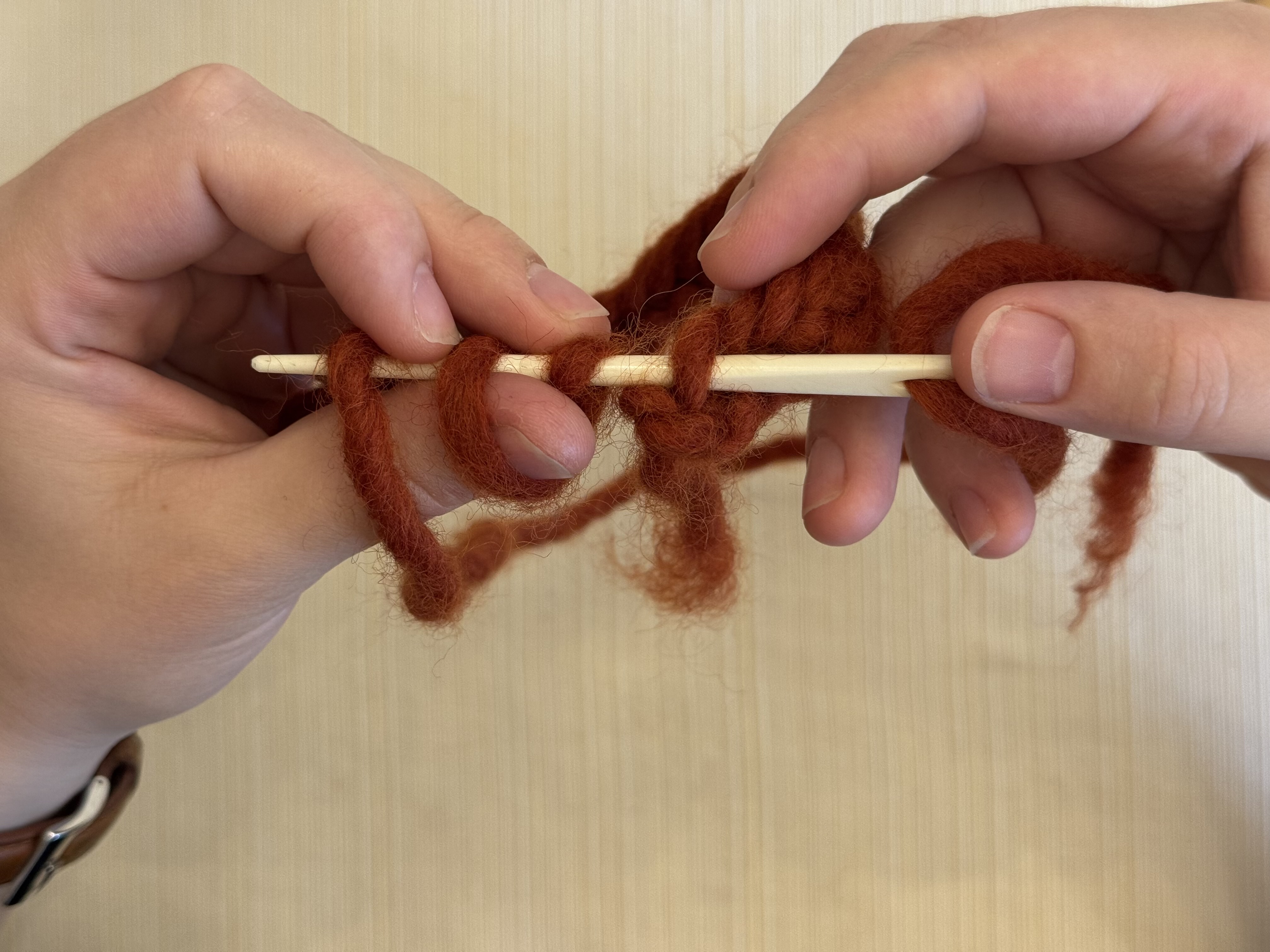
Insert your needle through the back loop, then under the thumb loop and working yarn as usual. Pull the needle through to make the stitch.
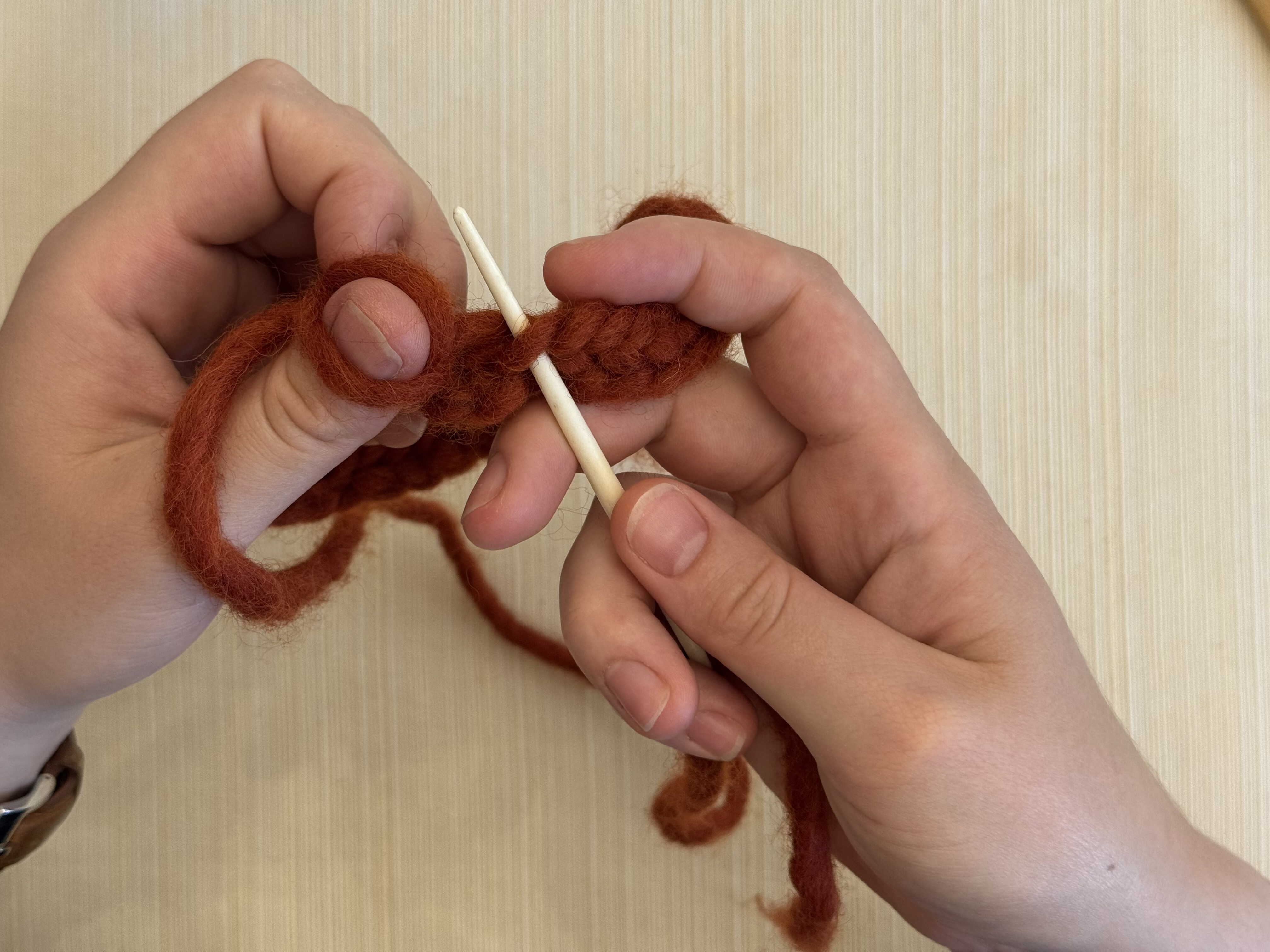
Pick up the next of the top-edge loops on the old end of the chain, now your previous row. Continue working around in a spiral.
F (Front) joins
F joins pick up loops on the front of the top edge of the previous row.
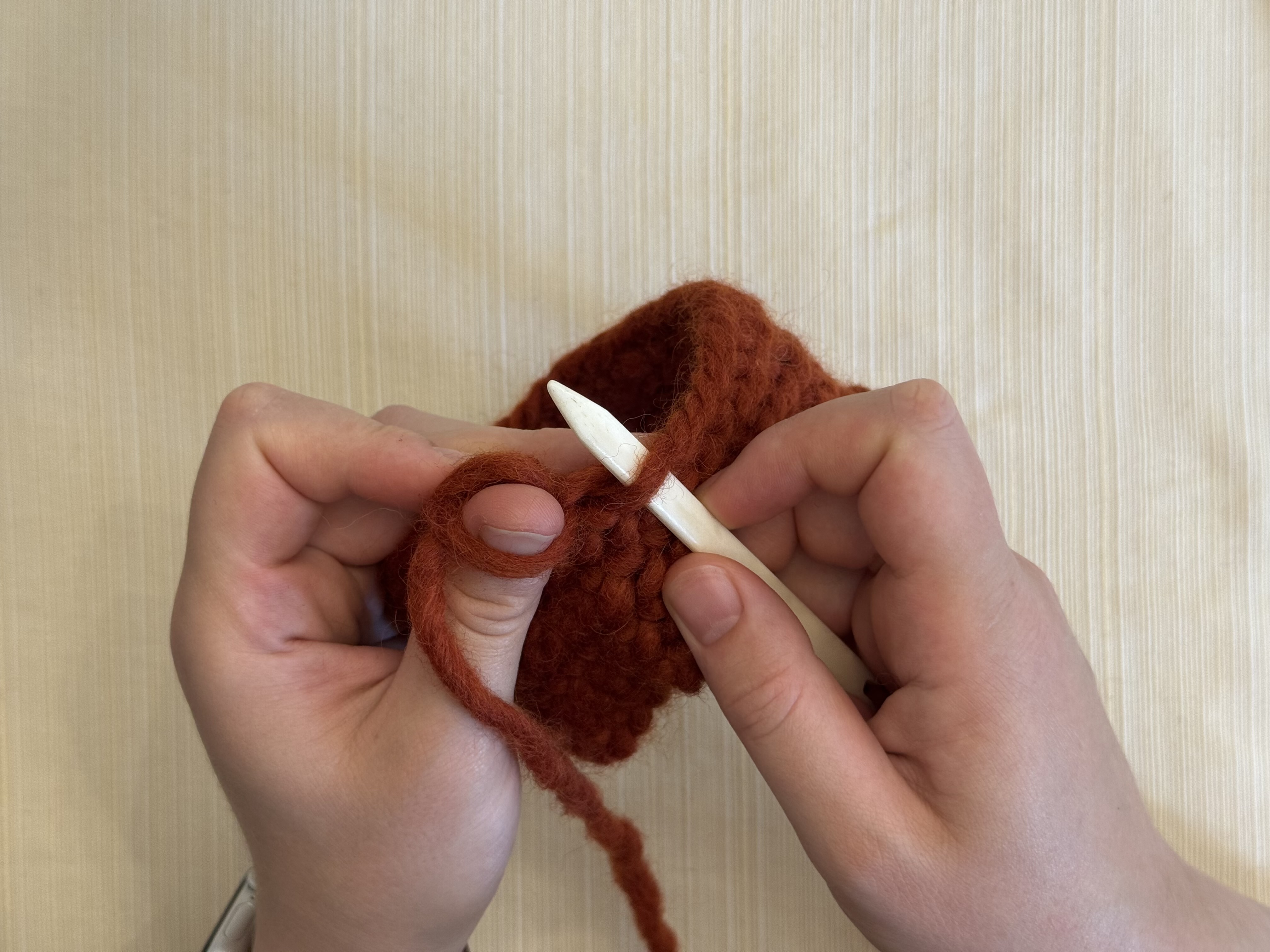
F1
Pick up a single new loop from the previous row, usually the loop on the top edge.
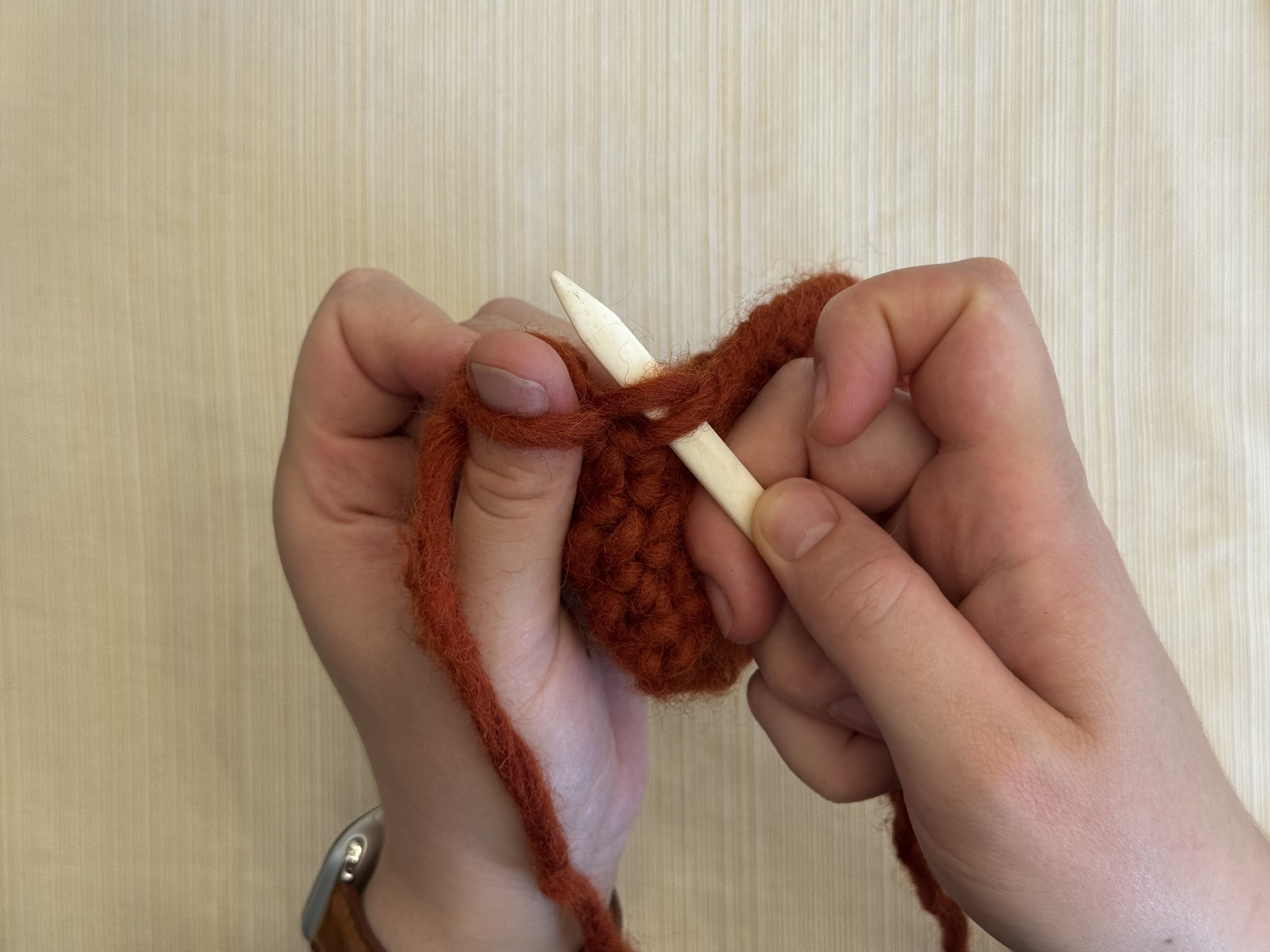
F2
Pick up a single new loop from the previous row, as well as the previous F loop to the left of it. This previous loop will have your thumb loop through it.