
Felting works best for yarn made up of at least 50% non-superwash wool. Plant fibers (cotton, linen) and synthetic fibers (acrylic) won’t felt, and superwash wool has been treated so the fibers won’t felt.
For wool to felt this way, it needs two things: water, and agitation.
The traditional method of felting yarn ends together is known as spit splicing, and it’s exactly what it sounds like. Nalbinders would place the ends of the yarn into their mouth and get them wet with saliva, then felt the ends together.
Since not everyone likes the taste or texture of wool fibers in their mouth, a small cup or jar of water will do perfectly fine as well. If you have a jar that seals, you can even take it with you on the go in your project bag.
The enzymes in saliva do make a difference and make the split splice more secure, but for most purposes, plain water works just as well.

When you run out of yarn on your working yarn, get a small jar or cup of clean water. Fray the end of the yarn apart into loose fibers.
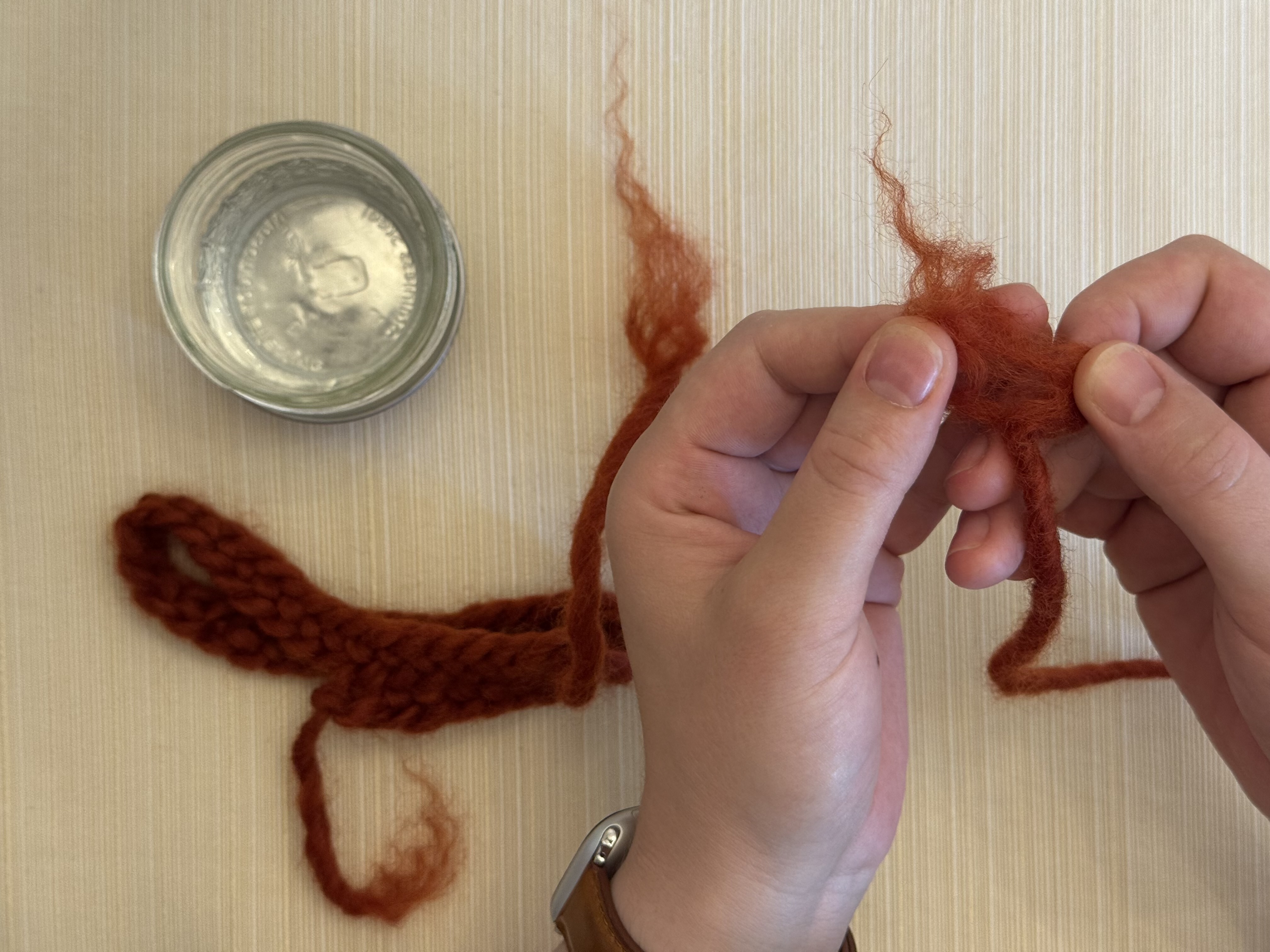
Break off a new length of yarn about an armspan long by pulling the yarn apart, and fray one end apart into loose fibers. If your yarn is dense or tightly twisted and you can’t break it just by pulling it apart, untwist the yarn where you want to break it first.
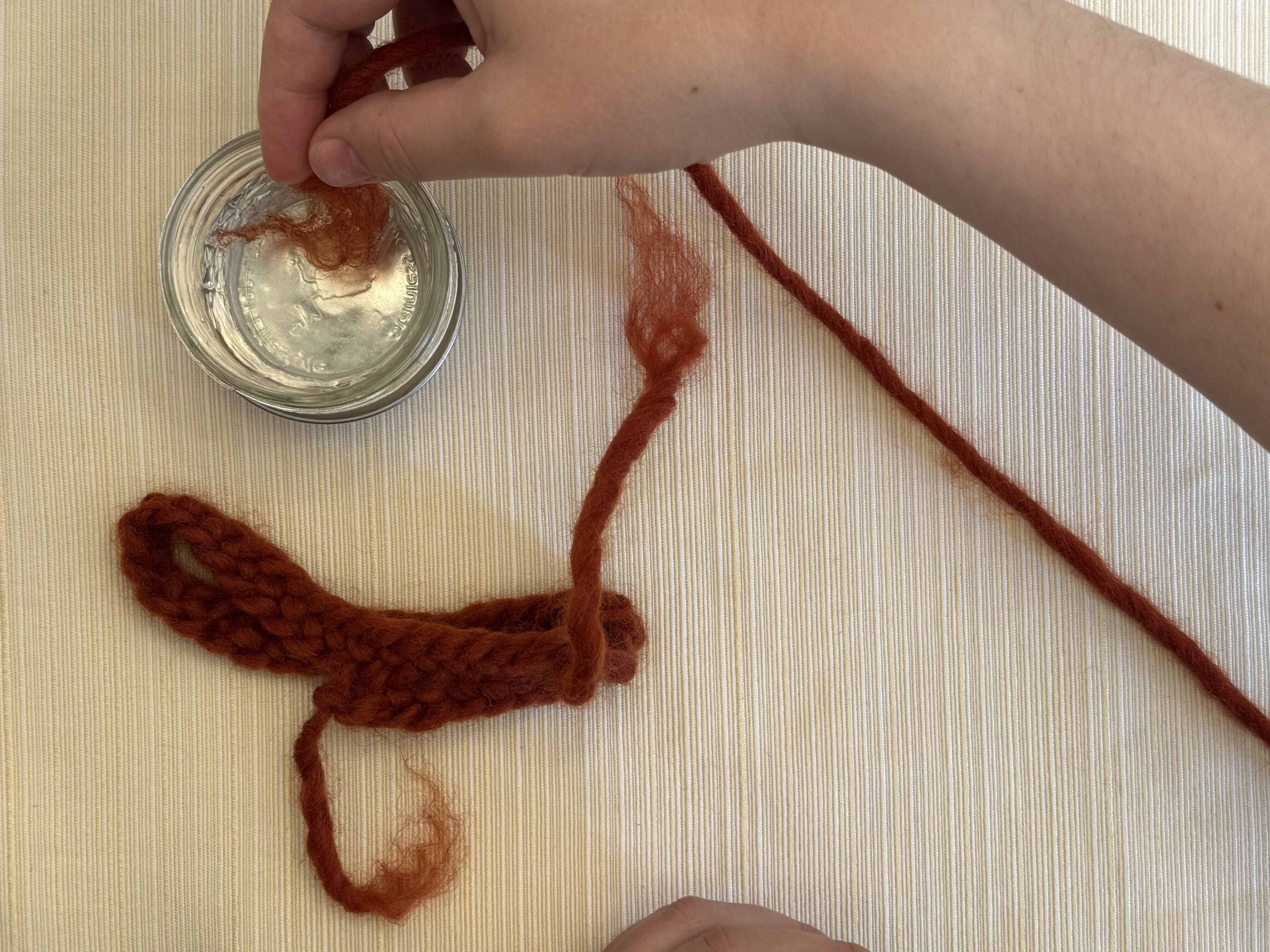
Dip the frayed end of the new length of yarn into the water so it’s damp but not soaking, so it doesn’t drip everywhere.
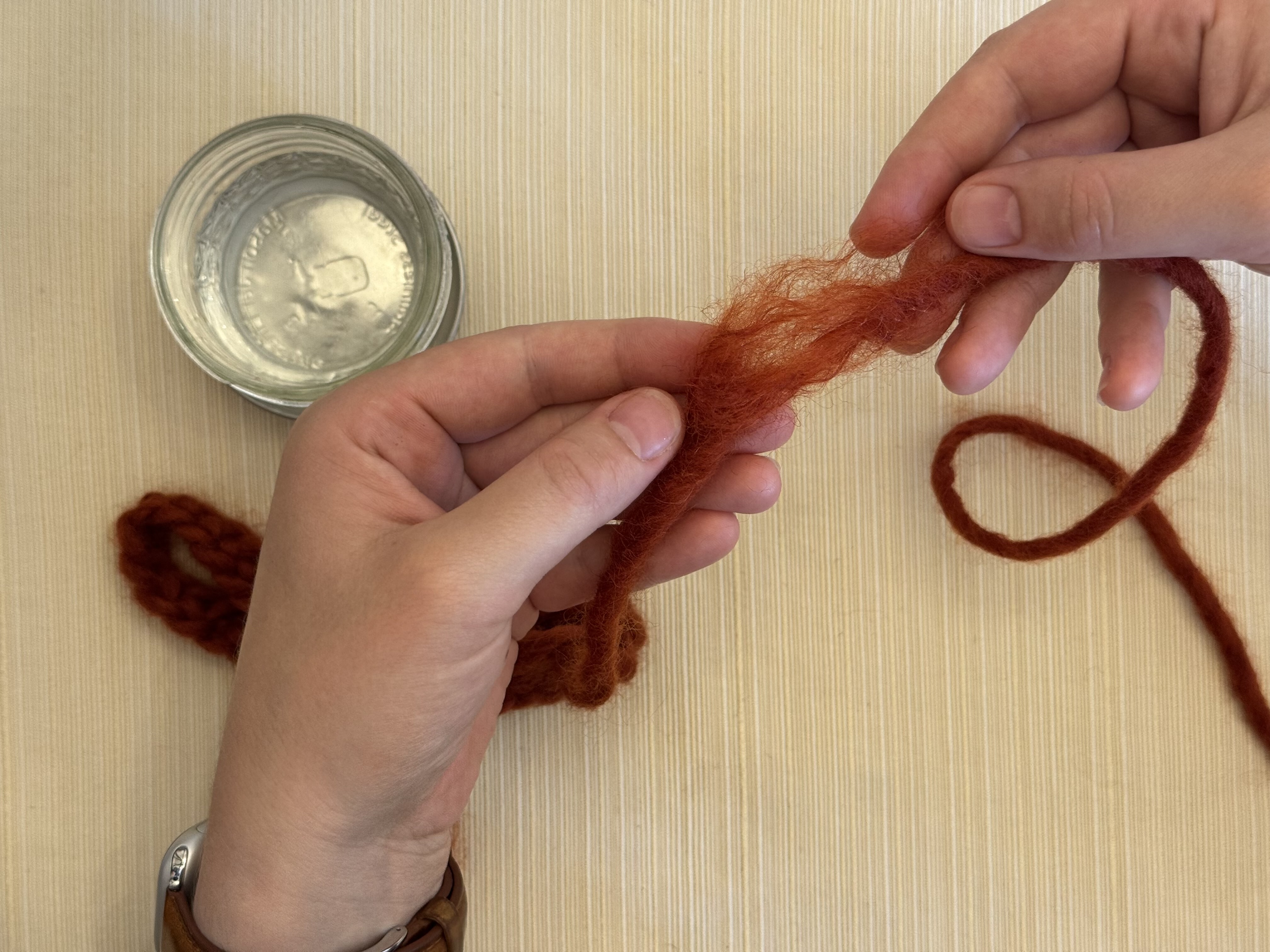
Overlap the frayed ends of the working yarn with the new length so that the longest fibers of each end are over the still-twisted part of the other piece of yarn.
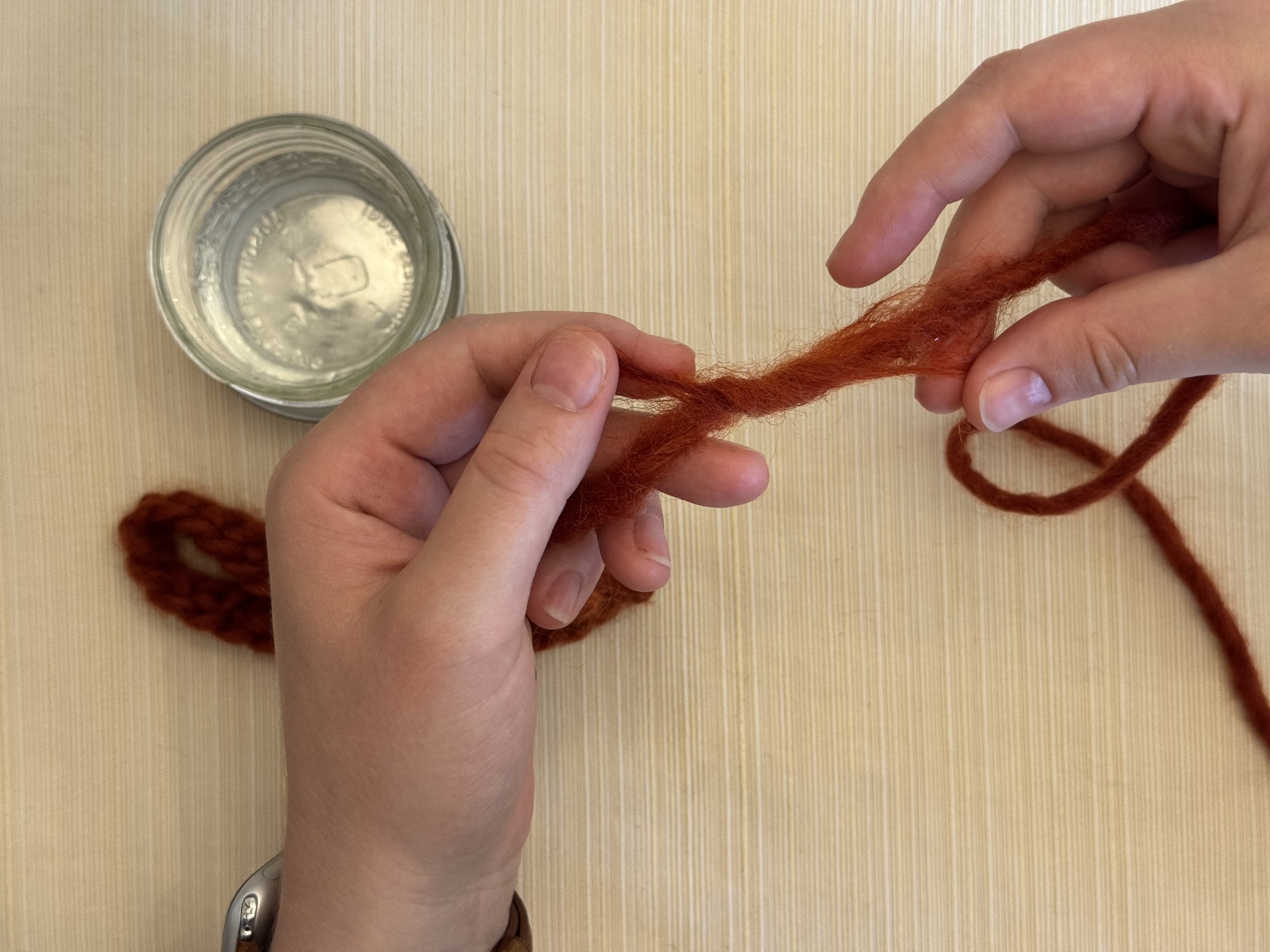
Smoosh, interweave, and twist the fibers together. The more thoroughly they mix, the more securely they’ll felt.

Place the join between your hands.
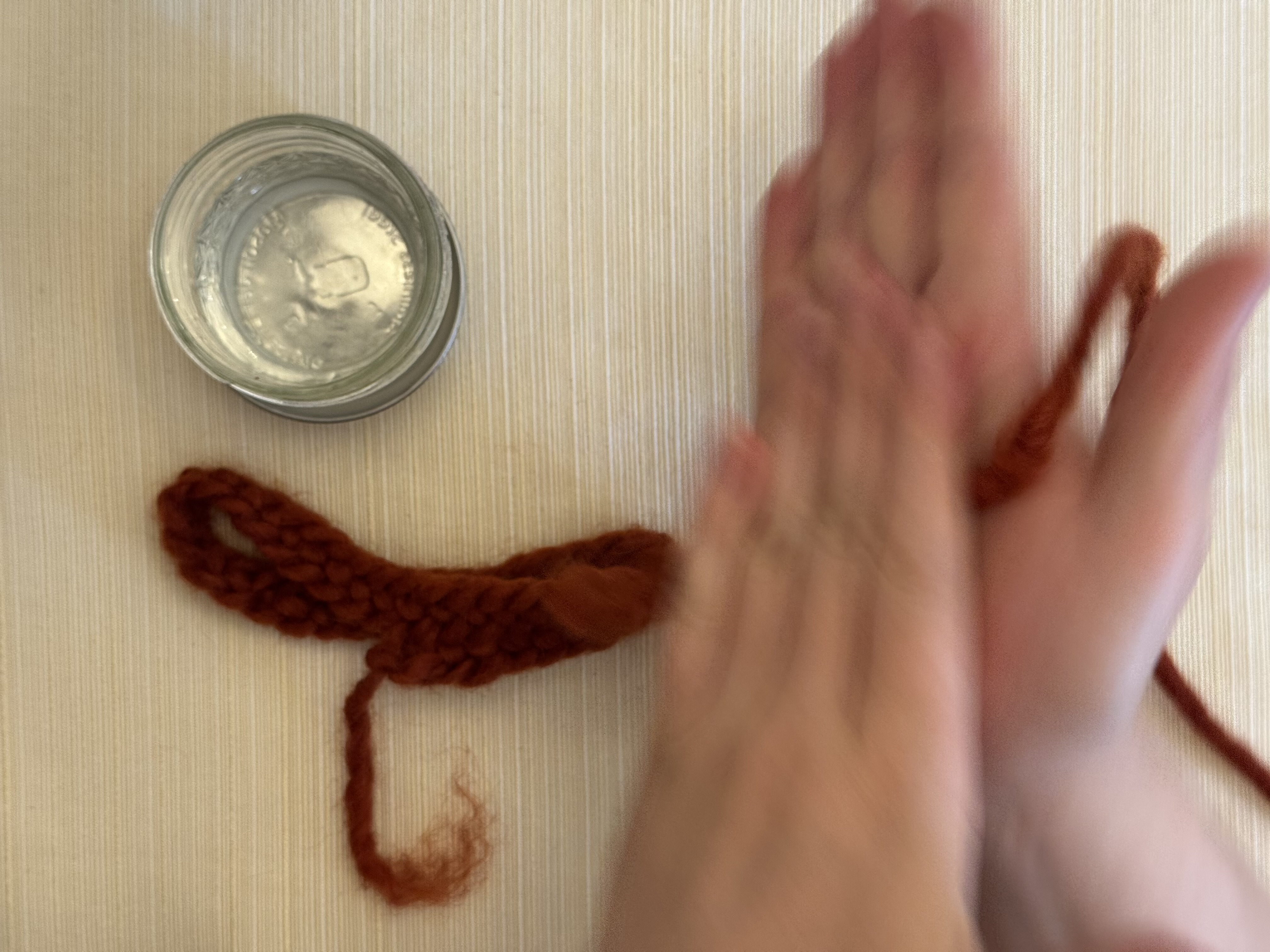
Rub your hands together vigorously. You can dip the join into the water again if it feels too dry. Rub the yarn together at different points along the join so the fibers are thoroughly felted together.

Carefully give your joined yarn a gentle tug. If the fibers pull apart, you may need to fray, mix, and rub them together again. If the join feels secure, you’re ready to keep nalbinding.